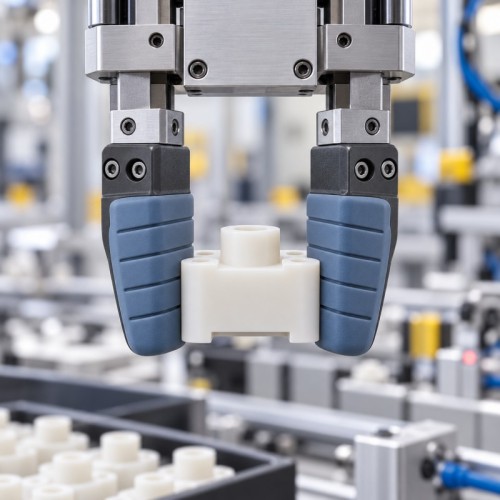
Custom Silicone Overmolded Robotic Gripper Finger Pad | Plastic Insert
Item specifics
- Product Type
- Robotic Gripper Finger Contact Pad
- Silicone Material
- LSR Option / Grade Subject to Validation
- Base Material
- Engineering Plastic Insert
- Molding Process
- Silicone Overmolding / Insert Molding
- Contact Surface
- Soft Silicone with Shallow Grip Ribs
- Mounting Structure
- Exposed Plastic Mounting Holes
- Main Function
- Compliant Contact / Gripping Surface
- Application
- Robotic Grippers / Pick-and-Place Automation
- Retention Design
- Edge Wrap / Mechanical Retention Subject to DFM
- Custom Service
- OEM / ODM / Drawing-Based Manufacturing
Review
Description
Product Overview
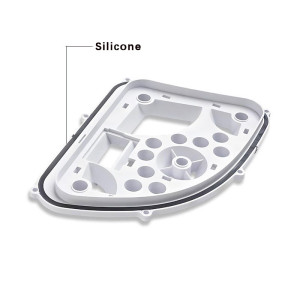
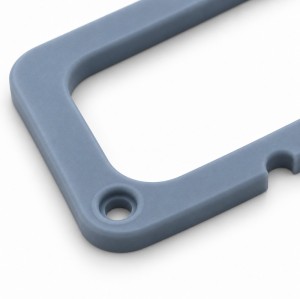
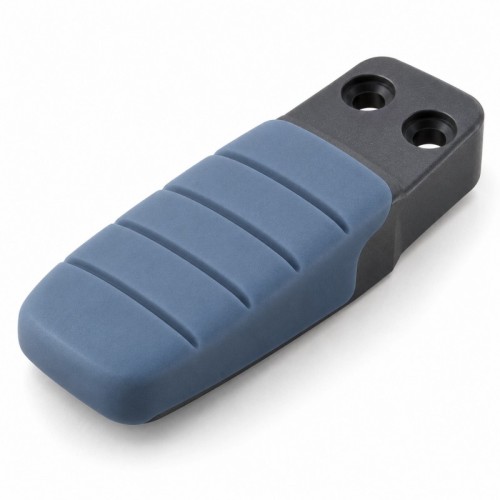
Custom silicone overmolded robotic gripper finger pads combine a rigid engineering-plastic insert with a flexible silicone contact surface for robotic and industrial automation applications.
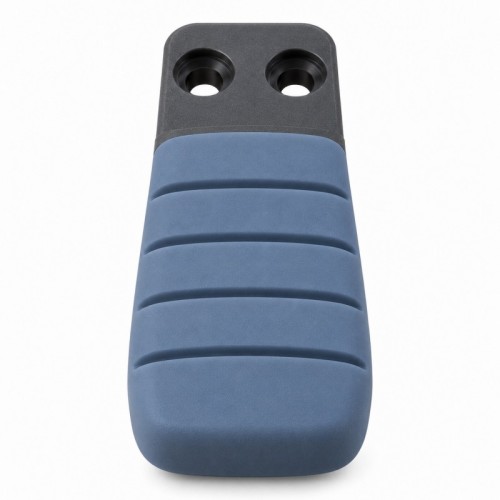
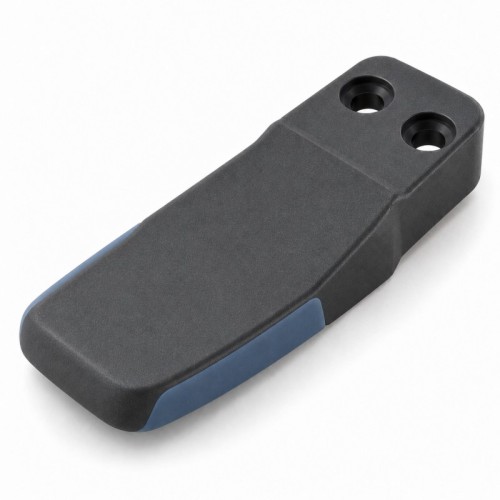
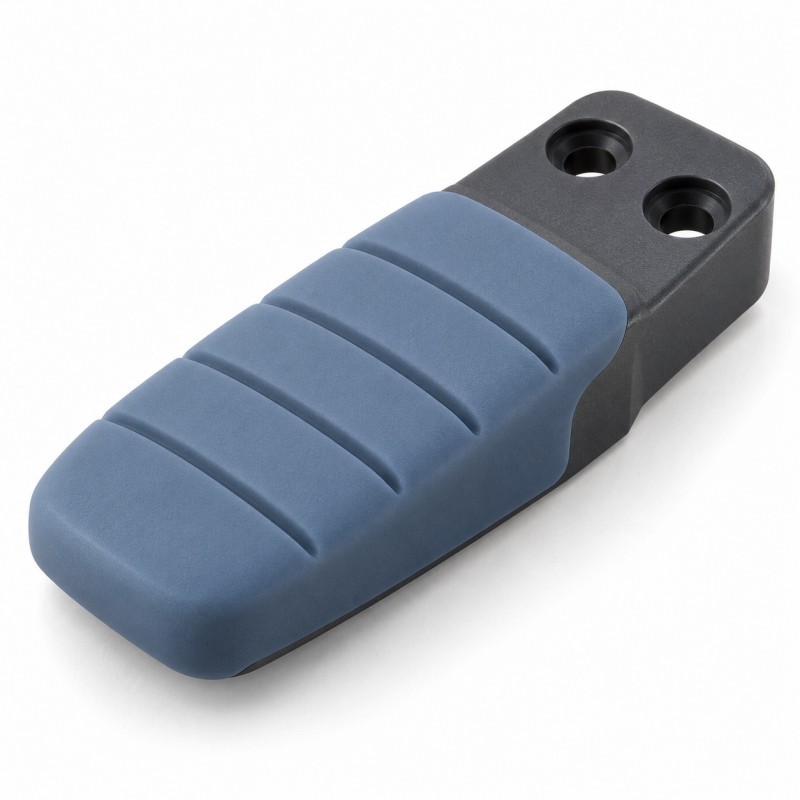
The proposed component features a defined silicone gripping area and an exposed plastic mounting section. Silicone is applied only to the intended contact region, while mounting holes and mechanical interfaces remain accessible.
The rigid plastic insert provides positioning and installation support. The flexible silicone layer creates a compliant interface between the gripper finger and the workpiece.
This product focuses on the custom overmolded contact component rather than the complete robotic gripper, actuator or control system.
SiliconePlus supports drawing-based silicone overmolding, substrate evaluation, DFM review, mold development and OEM manufacturing. The suitability of LSR, the plastic material and the final gripping performance must be verified for the customer's specific application.
Why Use a Silicone Contact Surface on Robotic Gripper Fingers?
Robotic grippers must maintain controlled contact with workpieces during automated positioning, handling and assembly.
A rigid gripper finger may not provide the preferred contact behavior for every workpiece, particularly when the part has a delicate finish or requires a more compliant interface.
A silicone contact layer can be considered when the gripping application requires:
- Controlled contact with the workpiece
- Local surface compliance
- Contact geometry matched to the workpiece
- A replaceable or custom-designed gripping interface
- Integration with a rigid mounting structure
- Reduced reliance on separately installed soft sleeves
However, silicone is not automatically the best gripping material. Required friction, abrasion resistance, contact pressure and service life must be evaluated against the actual workpiece.
Silicone overmolding allows a flexible contact area to be integrated with a rigid substrate, provided that the selected materials and retention method are suitable.
For broader manufacturing options, explore our industrial silicone overmolding parts.
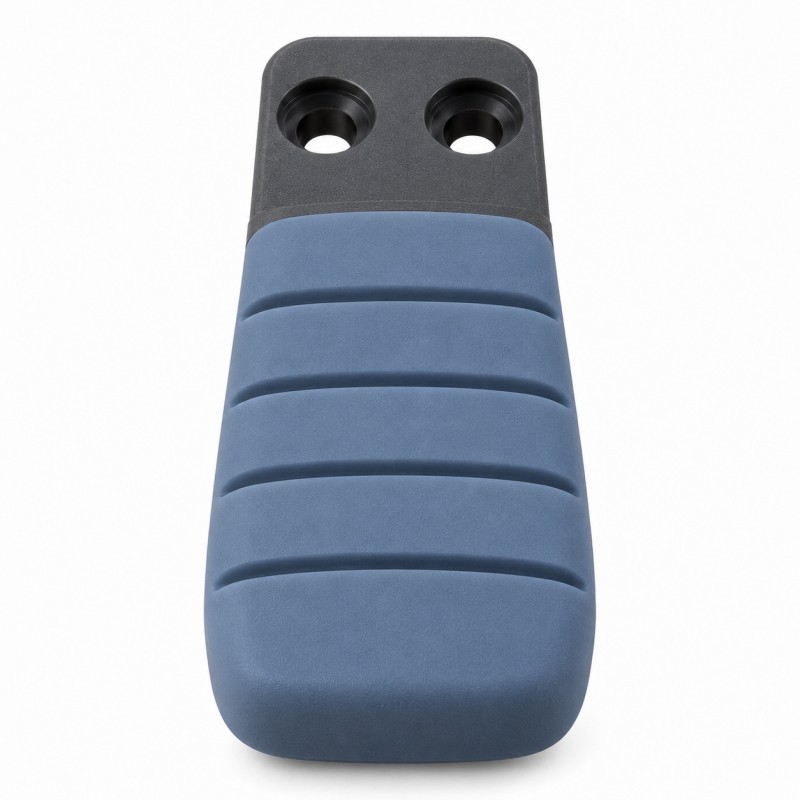
Custom Silicone Contact Surface
The silicone gripping surface can be designed with controlled thickness and shallow molded ribs. Contact geometry must be reviewed against the workpiece shape, gripping force and surface condition.
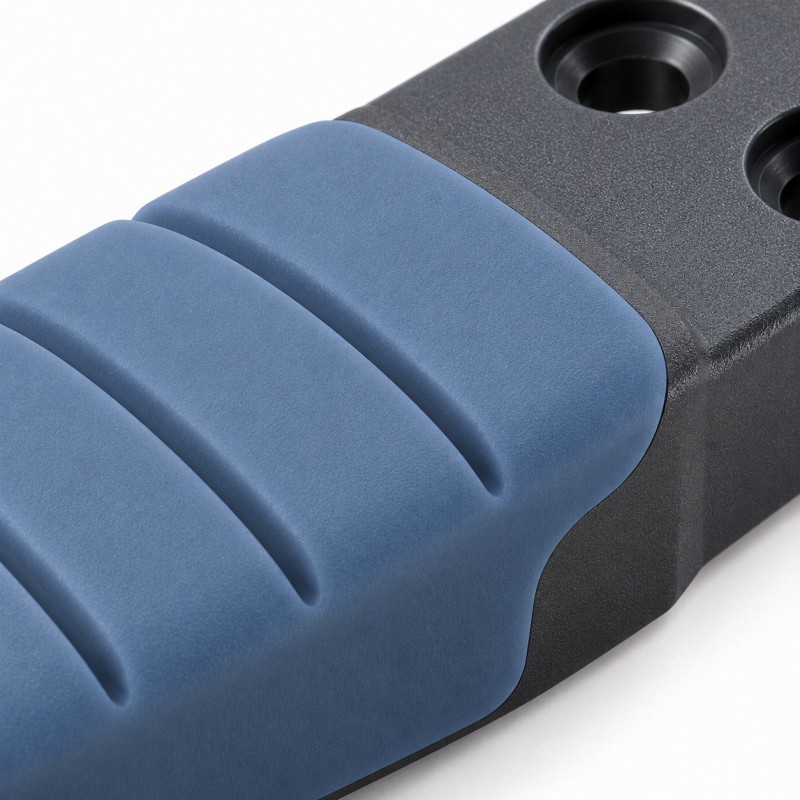
Silicone-to-Plastic Interface
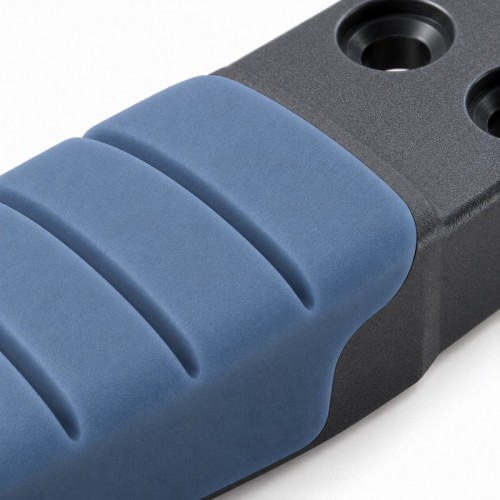
The overmolding boundary must be controlled to keep mounting holes and functional plastic surfaces exposed. Bonding compatibility and mechanical retention should be validated for the selected substrate.
Material and Structural Design Requirements
A custom robotic gripper contact pad should be designed around the actual workpiece and the mechanical interface of the gripper.
Important design information includes:
- Workpiece material and surface finish
- Workpiece geometry
- Gripping direction
- Required clamping force
- Contact area and pad profile
- Silicone thickness and hardness
- Surface texture and rib geometry
- Plastic substrate material
- Mounting hole positions
- Silicone coverage boundary
- Mechanical retention features
- Operating temperature
- Exposure to oils or cleaning agents
- Repeated loading and expected operating cycles
Engineering Plastic Substrate
The rigid plastic insert must remain dimensionally stable during the selected silicone molding process. Plastic grade, surface preparation and retention geometry should be reviewed before tooling approval.
Flexible Silicone Contact Layer
The silicone region should cover the specified contact area without blocking installation holes or other functional interfaces.
Material Bonding and Retention
Silicone-to-plastic bonding cannot be assumed from the material names alone. Depending on the approved design, retention may rely on validated adhesion, mechanical locking features or both.
DFM and Validation
Representative samples should be evaluated for dimensional fit, interface integrity, contact behavior and repeated-loading performance.
For projects involving other rigid-plastic and flexible-silicone combinations, review our plastic with silicone overmolding solutions.
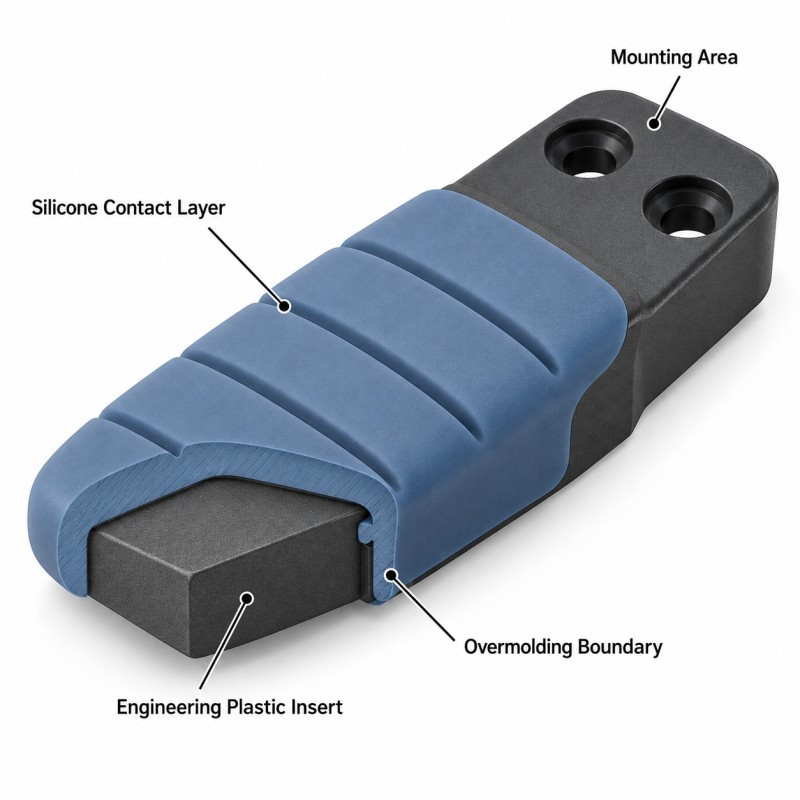
Overmolding Interface and DFM Review
The interface between the silicone layer and the rigid plastic insert is a critical part of the proposed gripper finger design.
During DFM review, engineers should evaluate:
- Insert material and thermal stability
- Insert positioning inside the mold
- Silicone coverage thickness
- Contact surface geometry
- Mold shut-off around mounting areas
- Edge wraparound and retention design
- Gate and venting locations
- Flash control
- Demolding direction
- Interface separation risk
- Dimensional inspection
- Functional sample testing
If mechanical retention features are used, their geometry must be compatible with silicone flow and demolding. Small retention holes or deep undercuts should not be added without a manufacturability review.
The finished component should be inspected to confirm that the silicone covers only the intended areas and that the plastic mounting interfaces remain usable.
The final bond or retention strength must be verified under the expected gripping and repeated-loading conditions.
To understand why insert location is important during silicone molding, read our guide to insert positioning in LSR overmolding.
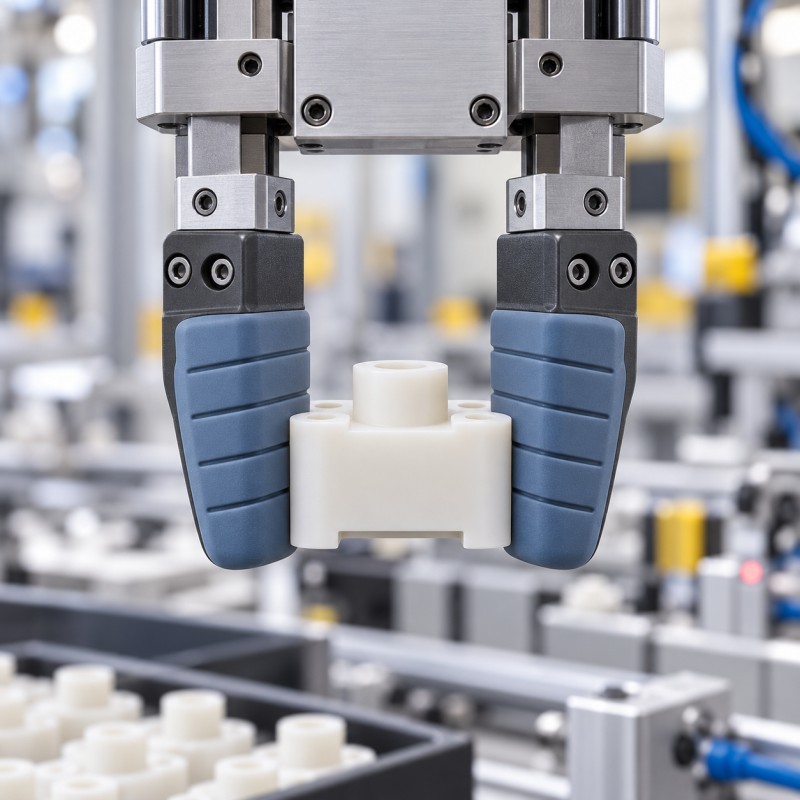
Robotic Automation Applications and Customization
Custom silicone overmolded gripper contact components may be evaluated for robotic and industrial automation applications such as:
- Parallel-jaw robotic grippers
- Automated assembly handling
- Small plastic component transfer
- Electronic enclosure handling
- Precision pick-and-place tooling
- Custom robotic end-of-arm equipment
These are potential applications. Suitability depends on the final gripper design, workpiece and operating conditions.
Customization can include the plastic insert geometry, silicone contact profile, mounting hole layout, silicone coverage, surface texture and material selection.
The customer should define the workpiece surface, clamping conditions, contact direction and required acceptance tests before finalizing the component.
SiliconePlus focuses on custom silicone overmolding and component manufacturing. The complete robotic gripper, actuators, sensors and automation system are outside the scope of this component.
For another example of a rigid plastic component with a localized silicone gripping surface, see our medical LSR overmolded instrument handle grip.
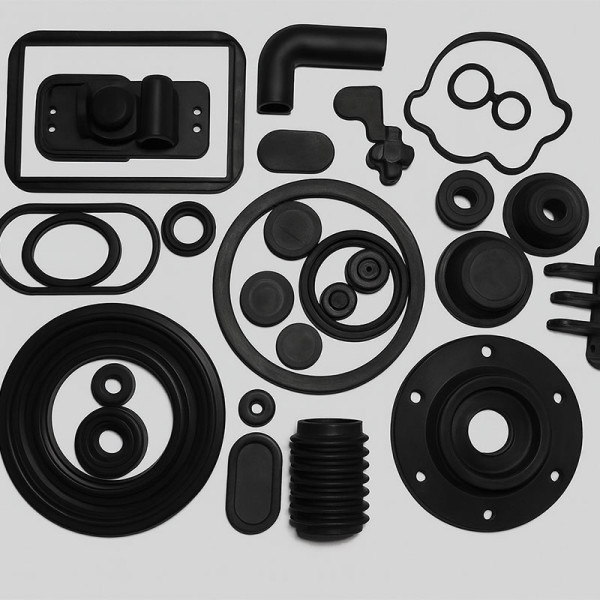
Custom silicone overmolded industrial parts manufacturer specializing in over plastic LSR components for applications.
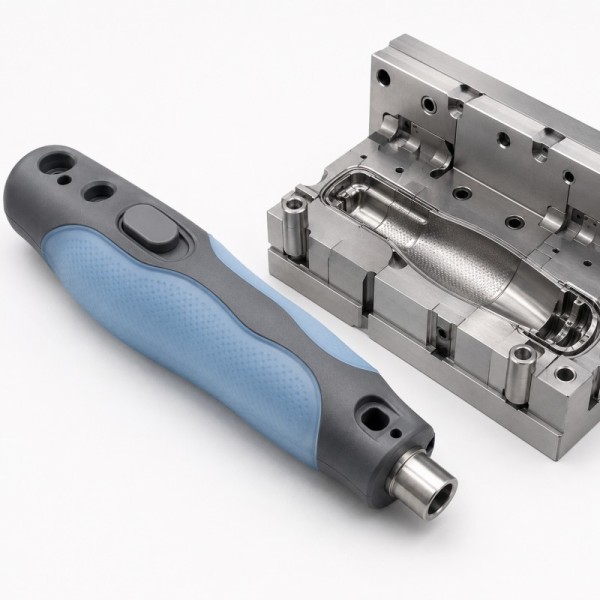
Custom LSR overmolded surgical instrument handles with soft grip, anti-slip design and OEM medical molding support.
Start Your Custom Robotic Gripper Pad Project
To request a quotation, please send us your 2D/3D drawing, gripper finger sample or design concept, workpiece material, gripping surface requirements, plastic substrate information, mounting interface and estimated order quantity.
If available, please also provide the gripping force, contact direction, operating environment and required validation criteria.
Our engineering team can review silicone material suitability, plastic substrate compatibility, overmolding boundaries, tooling feasibility and sample testing requirements.
SiliconePlus provides custom silicone overmolding services based on project specifications. Final interface retention and gripping performance must be verified before approved production.