Why Waterproof Silicone Seals Pass Assembly but Fail Testing
- Share
- publisher
- siliconeplus
- Issue Time
- Jul 13,2026
Summary
Waterproof silicone seals may look correct after assembly but still fail air-leak, immersion, pressure, temperature-cycle, or vibration testing. This guide explains how compression, tolerances, sealing-lip geometry, flash, insert positioning, bonding, material hardness, assembly, and production consistency affect custom LSR sealing components.
Introduction
A waterproof silicone seal may look completely normal after assembly. The housing closes correctly, the connector fits, the silicone edge appears continuous, and no obvious damage can be seen.
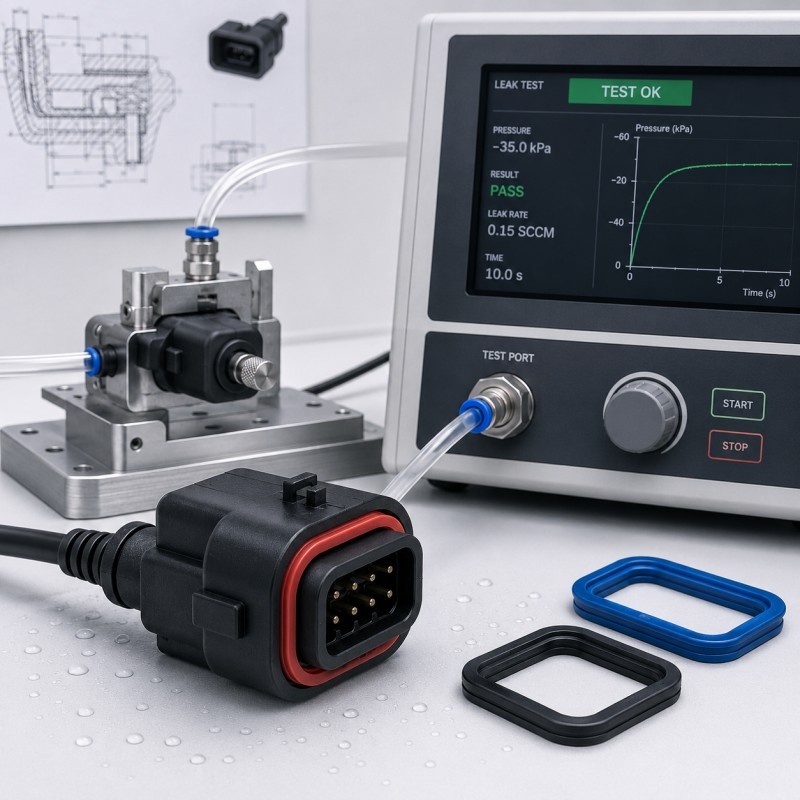
However, the product may still fail an air-leak test, immersion test, pressure-decay test, spray test, temperature-cycle test, or long-term reliability test.
This happens because waterproof sealing is not determined by appearance alone.
A silicone seal must maintain continuous contact, controlled compression, stable recovery, correct positioning, and reliable bonding under real assembly and application conditions. A small tolerance change, thin flash line, insert shift, weak bonding edge, uneven assembly force, or incorrect test condition may create a leakage path that cannot be found through visual inspection.
For engineers, sourcing teams, quality managers, and OEM buyers, the correct question is not only:
“Does the silicone seal fit?”
The more important question is:
“Can the complete sealing system maintain reliable contact under the defined test and service conditions?”
Answer Excerpt
Waterproof silicone seals may pass visual inspection and assembly but fail testing when the sealing path is discontinuous, compression is too low or too high, tolerances accumulate incorrectly, sealing lips deform, flash crosses the contact surface, inserts shift, bonding edges lift, or assembly force is uneven.
Reliable waterproof performance requires the silicone seal, substrate, groove, housing, mold, assembly process, and test conditions to be evaluated as one complete system. For custom LSR overmolded parts, waterproof performance should be validated through dimensional inspection, bonding evaluation, assembly testing, air-leak or immersion testing, environmental cycling, and pilot production before mass production.
1. Visual Fit Does Not Prove Waterproof Performance
A product can look correctly assembled while still containing a microscopic leakage path.
Visual inspection can identify obvious problems such as:
- A torn sealing lip
- Missing silicone
- Major flash
- Incorrect part orientation
- Visible insert movement
- Severe deformation
- Incomplete assembly
However, visual inspection may not detect:
- Insufficient local compression
- Uneven contact pressure
- Small parting-line defects
- A lifted bonding edge
- Housing flatness variation
- Minor insert offset
- A gap created by tolerance accumulation
- Internal leakage around an overmolded interface
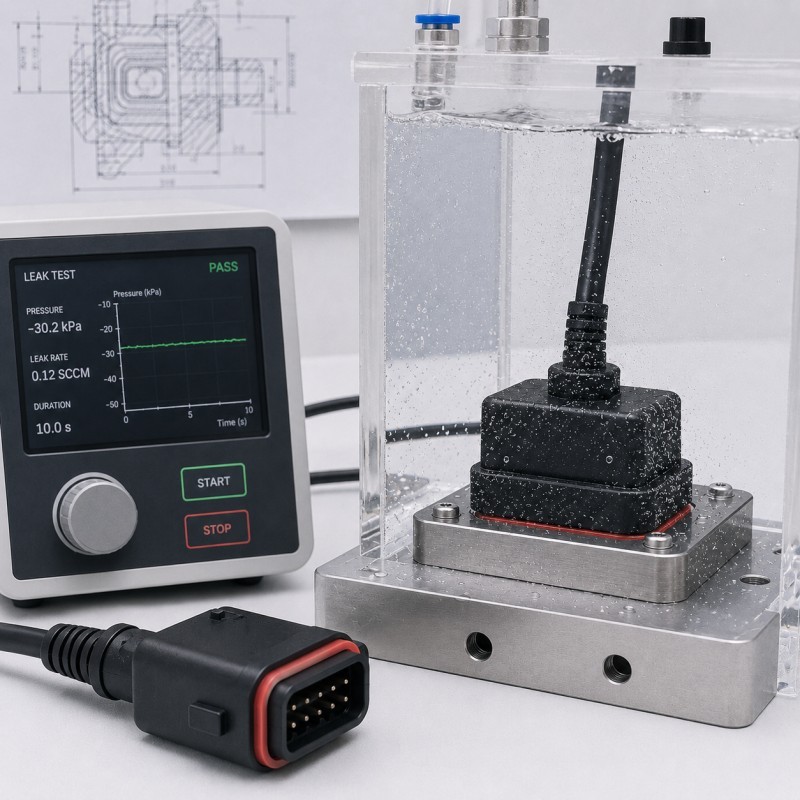
For waterproof projects, appearance inspection should therefore be combined with defined functional testing.
The complete assembly must create a continuous sealing barrier between the protected internal area and the external environment. One small interruption in that barrier may cause the entire product to fail.
2. The Seal Does Not Have Enough Compression
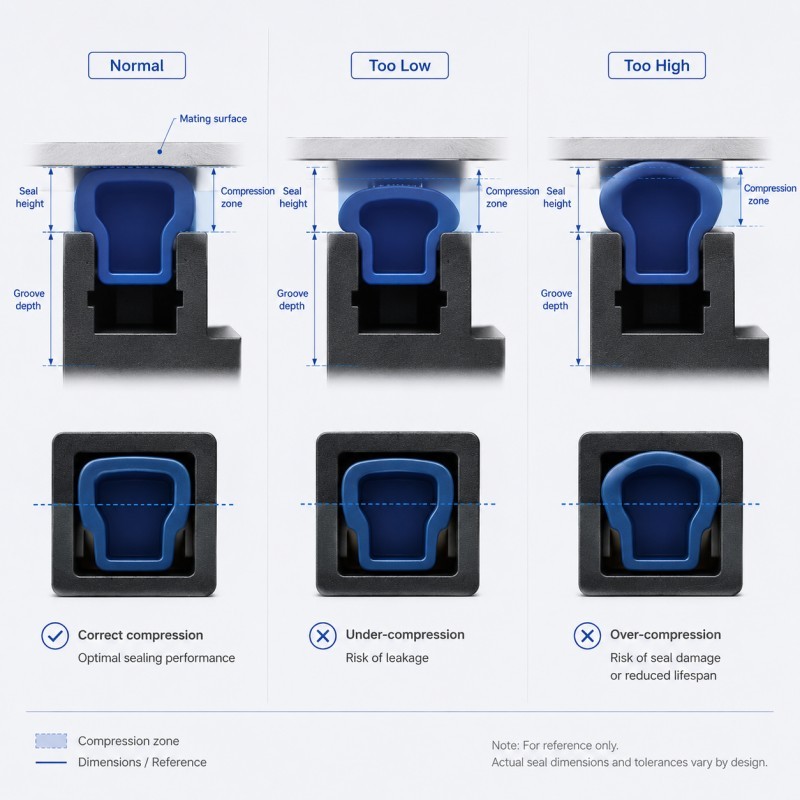
A silicone seal normally needs controlled deformation during assembly to maintain contact with the mating surface.
If compression is too low, the seal may only touch the housing lightly. It may look assembled, but water or air can pass through areas with insufficient contact pressure.
Low compression can result from:
- Groove depth being too large
- Silicone height being too low
- Housing dimensions being out of tolerance
- Insert position being too low
- Seal shrinkage
- Incorrect assembly gap
- Plastic housing deformation
- Uneven fastener force
This problem may not appear during a simple fit check because the housing can still close normally.
It becomes visible during pressure testing, immersion, vibration, or temperature change when the weak contact area becomes a leakage path.
3. Excessive Compression Can Also Cause Failure
More compression does not automatically produce better waterproofing.
If the silicone seal is compressed too much, several problems may occur:
- The sealing lip may roll or fold
- Silicone may be pushed out of the groove
- Assembly force may become too high
- The housing may deform
- The insert may shift
- Internal stress may increase
- The seal may lose recovery after prolonged loading
- The product may fail after repeated opening and closing
A seal that passes the first test may fail later if excessive compression creates permanent deformation or weakens the bonding edge.
Compression should therefore be selected according to the seal geometry, silicone hardness, groove structure, mating surface, assembly method, and expected service conditions.
4. Tolerance Stack-Up Creates Local Gaps
Waterproof performance depends on the complete assembly, not only the silicone part dimension.
The final compression may be affected by:
- Silicone seal height
- Groove depth
- Plastic housing dimensions
- Metal insert dimensions
- Screw position
- Housing flatness
- Assembly gap
- Mold shrinkage
- Insert placement
- Mating-surface tolerance
Each individual component may be within its drawing tolerance, but the combined tolerance stack may still create too much or too little seal compression.
For example, if the silicone seal is near its minimum height while the housing groove is near its maximum depth, the local compression may become insufficient even though both parts individually pass inspection.
For this reason, engineers should evaluate minimum, nominal, and maximum assembly conditions before approving the design.
5. The Sealing Lip Geometry Is Not Stable
A sealing lip must maintain continuous contact without collapsing, twisting, tearing, or moving during assembly.
Common geometry-related risks include:
- Lip structure that is too thin
- Lip height that is too tall
- Unsupported sealing edges
- Sharp stress concentration
- Inconsistent wall thickness
- Sudden thickness transitions
- Incorrect contact angle
- Insufficient groove retention
- Sealing lips located too close to the parting line
A thin sealing lip may look precise after molding but become unstable when compressed.
A tall unsupported lip may fold instead of compressing.
An uneven sealing path may create different compression levels around the same product.
The sealing structure should be reviewed together with mold flow, demolding direction, assembly movement, silicone hardness, and the location of the mating surface.
6. Flash or Parting Lines Cross the Sealing Surface
Liquid silicone rubber can flow into very small gaps. This is useful for producing fine structures, but it also means mold precision and shut-off control are critical.
If flash crosses the sealing contact area, it may create:
- An uneven sealing surface
- A raised leakage path
- Local compression loss
- Assembly interference
- A weak tear point
- Inconsistent results between cavities
A very thin flash line may be difficult to see without magnification, but it can still affect a precision waterproof interface.
The mold parting line should therefore be positioned away from critical sealing surfaces whenever possible.
Buyers should also define acceptable flash standards instead of using only general statements such as “no visible flash.”
7. The Bonding Interface Becomes a Leakage Path
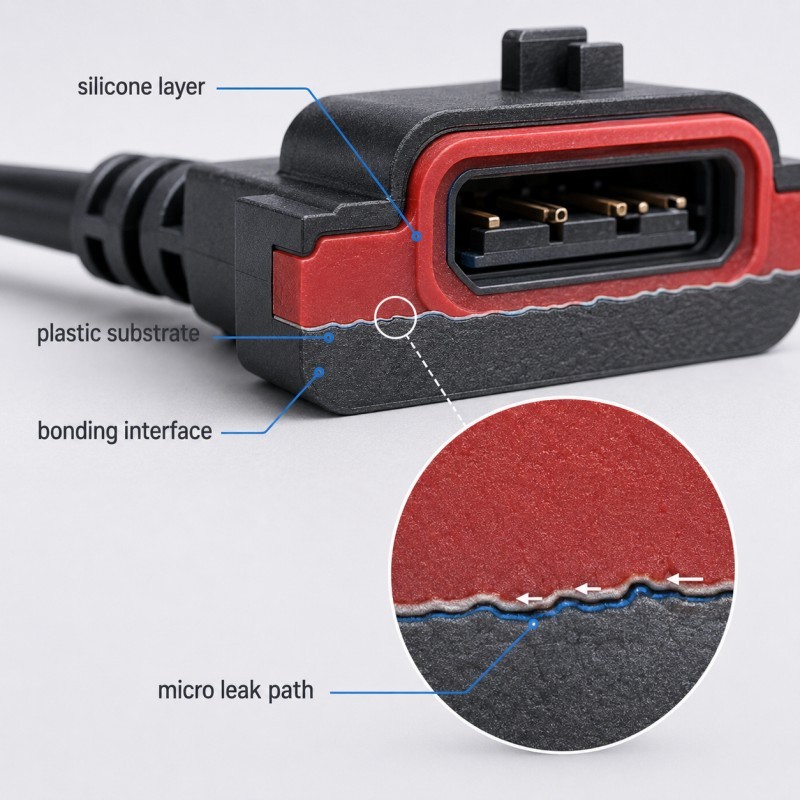
In silicone overmolding, leakage may occur through the interface between the silicone and the substrate.
The substrate may be:
- Plastic
- Metal
- FPC
- Cable
- Connector
- Electronic insert
- Pre-molded silicone
A seal may compress correctly against the housing but still leak if water enters through a weak bonding edge.
Possible causes include:
- Incompatible silicone and substrate
- Oil or contamination on the insert
- Insufficient bonding area
- Poor surface treatment
- Incorrect primer
- Weak mechanical locking
- Insert movement
- Excessive internal stress
- Incomplete silicone coverage
- Bonding degradation after aging
For critical waterproof components, engineers should evaluate both the main sealing surface and the overmolding interface.
Chemical bonding, surface treatment, and mechanical locking may need to work together to improve long-term reliability.
8. Plastic Inserts Deform During Molding or Assembly
Silicone over plastic parts may fail testing when the plastic insert changes shape.
A plastic insert may deform because of:
- Insufficient temperature resistance
- Thin-wall structure
- Inadequate mold support
- Excessive injection pressure
- Uneven silicone thickness
- Residual stress from plastic molding
- Incorrect storage
- Assembly force
- Screw tightening
- Temperature cycling
The deformation may be small enough to pass visual inspection but large enough to change the sealing gap.
Once the plastic housing bends, the silicone seal may become over-compressed in one area and under-compressed in another.
Before tooling, the plastic grade, insert thickness, support structure, flatness, tolerance, and molding-temperature resistance should be reviewed.
9. Insert Positioning Is Not Repeatable
Plastic, metal, FPC, cable, and electronic inserts must be held accurately inside the mold.
A small insert offset can change:
- Silicone thickness
- Sealing-lip position
- Bonding-edge width
- Assembly alignment
- Functional hole position
- Contact-pad exposure
- Compression around the sealing path
This is especially important for small connectors, sensors, wearable components, FPC modules, and electronic waterproof parts.
One sample may pass because the insert happened to be correctly positioned. Another sample or production cavity may fail because the insert moved slightly.
Insert fixtures, mold support, loading method, orientation control, and inspection standards should be designed for repeatable mass production rather than only successful sampling.
10. Silicone Hardness Does Not Match the Structure
Selecting a softer silicone does not automatically improve sealing.
Softer silicone may provide easier compression and conform better to surface variation. However, it may also:
- Fold during assembly
- Move out of position
- Tear around thin sections
- Provide insufficient structural support
- Deform under pressure
- Create handling problems
Harder silicone may improve dimensional stability and handling, but it may require greater assembly force and may not conform sufficiently to the mating surface.
Hardness should therefore be selected together with:
- Seal thickness
- Lip geometry
- Groove design
- Compression space
- Assembly force
- Pressure exposure
- Temperature range
- Repeated-use requirement
The best hardness cannot be selected from material data alone. It must be validated in the actual product structure.
11. The Seal Loses Recovery After Long-Term Compression
A waterproof seal must continue maintaining contact after it has been compressed for a period of time.
A product may pass an immediate test after assembly but fail after:
- Heat aging
- Long-term compression
- Temperature cycling
- Repeated opening and closing
- Chemical exposure
- Storage
- Vibration
- Mechanical loading
If the silicone does not recover sufficiently, contact pressure may decrease and create a leakage path.
This is why initial testing alone is not always enough for automotive, medical, industrial, wearable, or outdoor electronic components.
The validation plan should reflect the actual working environment and required product life.
12. Assembly Conditions Are Not Controlled
Even a well-designed silicone seal can fail when the assembly process is unstable.
Assembly variables may include:
- Screw torque
- Fastening sequence
- Pressing force
- Housing alignment
- Seal cleanliness
- Lubrication
- Assembly speed
- Worker operation
- Fixture accuracy
- Repeated disassembly
- Damaged mating surfaces
For example, tightening one side of a housing completely before tightening the other side may create uneven seal compression.
Dust, oil, fibers, or plastic particles on the sealing surface can also create leakage.
For mass production, the assembly method should be documented and validated together with the silicone component.
13. The Waterproof Test Does Not Match the Product Requirement
“Waterproof” is not one single test condition.
Different projects may use:
- Air-leak testing
- Pressure-decay testing
- Vacuum testing
- Water immersion
- Spray testing
- High-pressure water testing
- Temperature-and-humidity testing
- Thermal cycling
- Saltwater exposure
- Repeated assembly testing
The result can change depending on:
- Water depth
- Pressure
- Test duration
- Temperature
- Sample orientation
- Preconditioning
- Assembly age
- Acceptance limit
- Test equipment
- Number of cycles
A product may pass a short immersion test but fail pressure cycling.
It may pass at room temperature but fail after high- and low-temperature exposure.
It may pass as a silicone component but fail after final product assembly.
Before mold approval, the buyer and manufacturer should agree on the exact test method and acceptance criteria.
14. One Good Sample Does Not Prove Production Stability
Prototype samples are often produced under close engineering supervision.
The mold may be adjusted carefully, inserts may be loaded manually, and process parameters may be optimized for a small number of pieces.
Mass production introduces more variation:
- Multiple mold cavities
- Different insert batches
- Material batch changes
- Operator changes
- Longer production time
- Mold-temperature variation
- Equipment variation
- Tool wear
- Higher production speed
- Packaging and transportation
A waterproof project should therefore include pilot production and repeated testing.
The goal is not only to prove that one part can pass. The goal is to prove that the process can repeatedly produce parts that meet the same sealing standard.
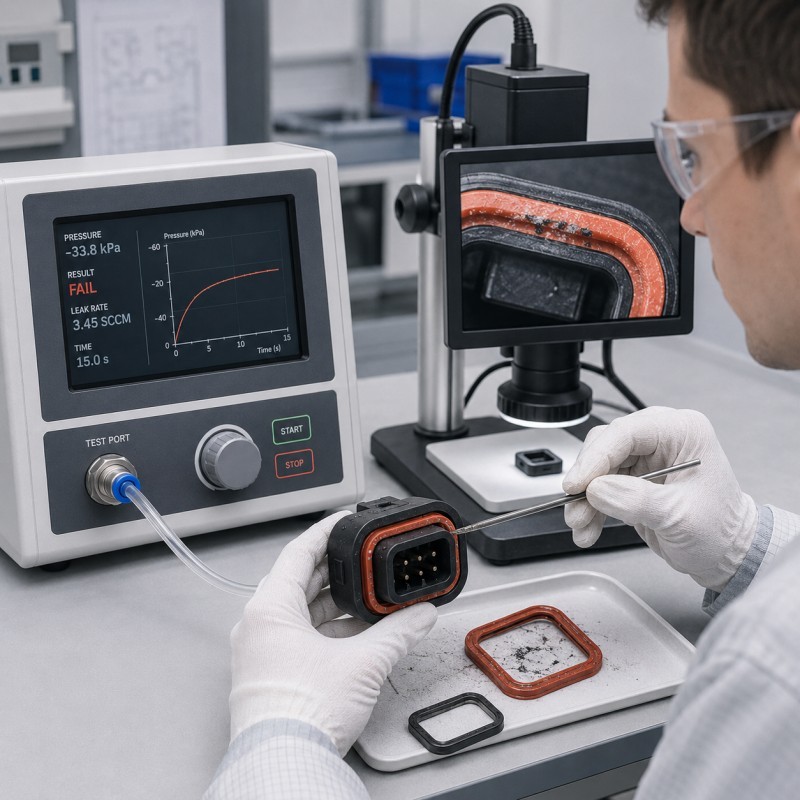
15. A Practical Failure-Analysis Sequence
When an assembled product fails waterproof testing, do not immediately assume that the silicone material is the problem.
A practical investigation can follow this order:
- Confirm the exact leakage location.
- Check whether leakage passes across the sealing surface or bonding interface.
- Measure the silicone seal and mating components.
- Review minimum and maximum compression conditions.
- Inspect flash, parting lines, tears, deformation, and contamination.
- Check insert position and substrate flatness.
- Compare passing and failing samples.
- Review assembly force, torque, sequence, and fixtures.
- Repeat the test under controlled conditions.
- Perform aging, cycling, bonding, or dimensional testing when required.
- Review process parameters and cavity-to-cavity variation.
- Update the drawing, inspection plan, or mold structure based on the confirmed root cause.
Changing several variables at the same time can make the root cause harder to identify.
The investigation should use measured evidence rather than only visual judgment.
16. What Should Be Validated Before Mass Production?
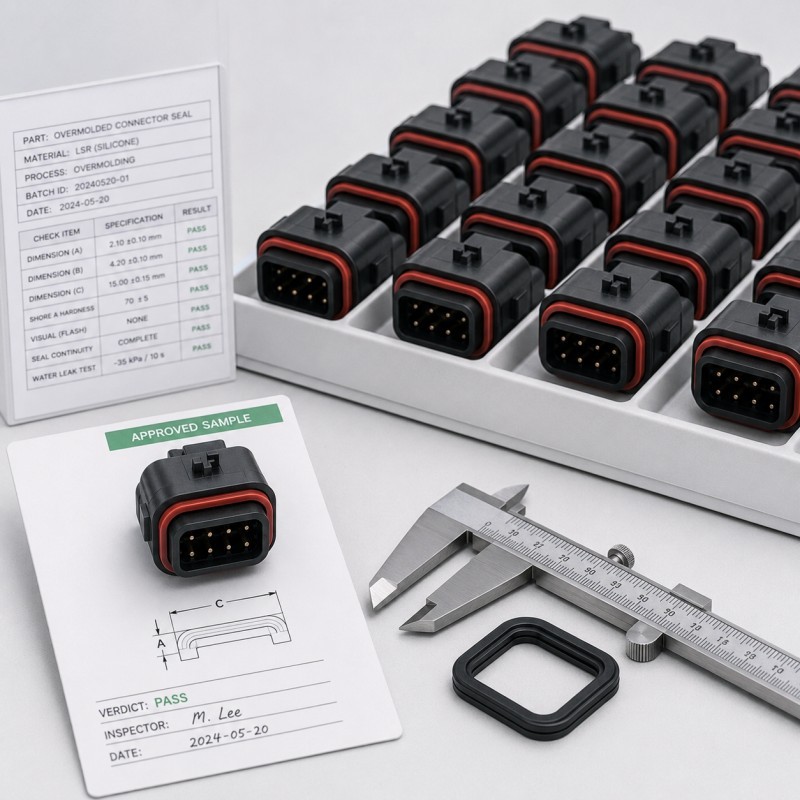
Before approving a waterproof silicone seal for mass production, buyers should confirm:
- Final drawing dimensions
- Silicone hardness
- Material grade
- Seal height and thickness
- Groove dimensions
- Compression conditions
- Sealing-lip geometry
- Parting-line location
- Flash acceptance standard
- Insert position
- Substrate dimensions
- Bonding method
- Assembly procedure
- Test method
- Acceptance criteria
- Environmental aging requirements
- Pilot-production consistency
- Packaging condition
- Traceability and inspection records
For an IP67 or IP68 project, the waterproof level should be validated according to the complete assembled product and defined test conditions.
The silicone material alone cannot guarantee the final waterproof rating.
How SiliconePlus Supports Waterproof LSR Overmolding Projects
SiliconePlus provides custom liquid silicone injection molding and silicone overmolding services for waterproof components used in automotive electronics, 3C devices, medical electronics, wearable products, sensors, beauty devices, and industrial equipment.
Our capabilities include:
- DFM and drawing review
- Liquid silicone injection molding
- Silicone over plastic
- Silicone over metal
- FPC silicone overmolding
- Waterproof sealing-structure review
- Custom mold development
- Insert-positioning design
- Material and hardness selection
- Sample and pilot production
- Dimensional inspection
- Bonding evaluation
- Air-leak and waterproof test coordination
- OEM/ODM mass production
For waterproof projects, our team reviews the complete system instead of evaluating only the silicone component.
This includes the substrate, silicone structure, mold, sealing path, compression space, tolerance, assembly method, test conditions, and production consistency.
Frequently Asked Questions
Why does a silicone seal leak even when no damage is visible?
The seal may have insufficient local compression, uneven contact pressure, a small flash line, tolerance accumulation, insert offset, housing deformation, or a weak bonding interface that cannot be identified through normal visual inspection.
Does softer silicone always improve waterproof performance?
No. Softer silicone may conform more easily, but it can also fold, move, tear, or deform. Hardness must match the seal geometry, thickness, compression space, assembly force, and pressure conditions.
Can an overmolded silicone part leak through the bonding edge?
Yes. If the silicone does not bond or mechanically lock correctly with plastic, metal, FPC, or another substrate, the interface may become a leakage path.
Why does the sample pass but mass production fail?
Production introduces additional variation in insert dimensions, positioning, material batches, mold cavities, process parameters, assembly, and inspection. Pilot production and repeatability testing are therefore necessary.
Can LSR overmolding support IP68 waterproofing?
It may support waterproof performance up to IP68 when the sealing structure, material, substrate, mold accuracy, bonding, assembly, tolerance, and test conditions are properly designed and validated. The complete assembled product must be tested.
What information is needed to evaluate a waterproof sealing project?
Provide 2D or 3D drawings, substrate material, silicone requirement, assembly structure, sealing path, target waterproof level, test method, working environment, critical dimensions, estimated quantity, and known failure information.
Conclusion
A waterproof silicone seal can pass assembly and still fail testing because visual fit is only one part of sealing performance.
Reliable waterproofing depends on continuous sealing contact, controlled compression, suitable hardness, stable insert positioning, accurate tolerances, clean parting lines, strong bonding, repeatable assembly, and clearly defined testing conditions.
For custom LSR overmolding projects, waterproof risks should be reviewed before tooling and validated again during samples, pilot production, and mass production.
If you are developing a waterproof silicone seal or overmolded component, contact SiliconePlus and send us your drawing, substrate material, assembly structure, waterproof requirement, test conditions, known failure information, and estimated quantity. Our team will review the project and provide practical manufacturing recommendations.