Why Silicone Overmolding Design Fails Before Tooling? 8 Engineering Checks Every Product Engineer Should Review
- Share
- publisher
- SiliconePlus Engineering Team
- Issue Time
- Sep 2,2026
Summary
Many silicone overmolding failures can be prevented before tooling starts. Learn the key engineering checks including insert design, bonding structure, mold shut-off, silicone flow, sealing performance and production validation.
Answer Excerpt
Silicone overmolding failures are often caused before the mold is manufactured.
Incorrect insert design, poor bonding structure, uncontrolled silicone flow and insufficient sealing consideration can create production problems later.
A professional LSR overmolding process requires engineering review, DFM analysis and tooling validation before mass production.
Why Silicone Overmolding Design Fails Before Tooling? 8 Engineering Checks Every Product Engineer Should Review
Many silicone overmolding projects fail not because of the LSR material itself, but because engineering details are ignored before tooling.
During product development, designers often focus on the final appearance and function.
However, successful silicone overmolding depends on several factors:
• Insert structure
• Silicone coverage area
• Bonding interface
• Mold shut-off design
• Venting position
• Sealing compression
• Manufacturing tolerance
• Production validation
For automotive electronics, medical devices, wearable products and consumer electronics, these details directly affect waterproof performance, durability and mass production stability.
1. Incorrect Insert Design Creates Overmolding Problems
In silicone insert molding, the insert component determines the final product structure.
Common inserts include:
• Plastic housings
• Metal components
• FPC circuits
• Electronic connectors
The insert design must consider:
• Positioning accuracy
• Silicone thickness
• Bonding area
• Assembly tolerance
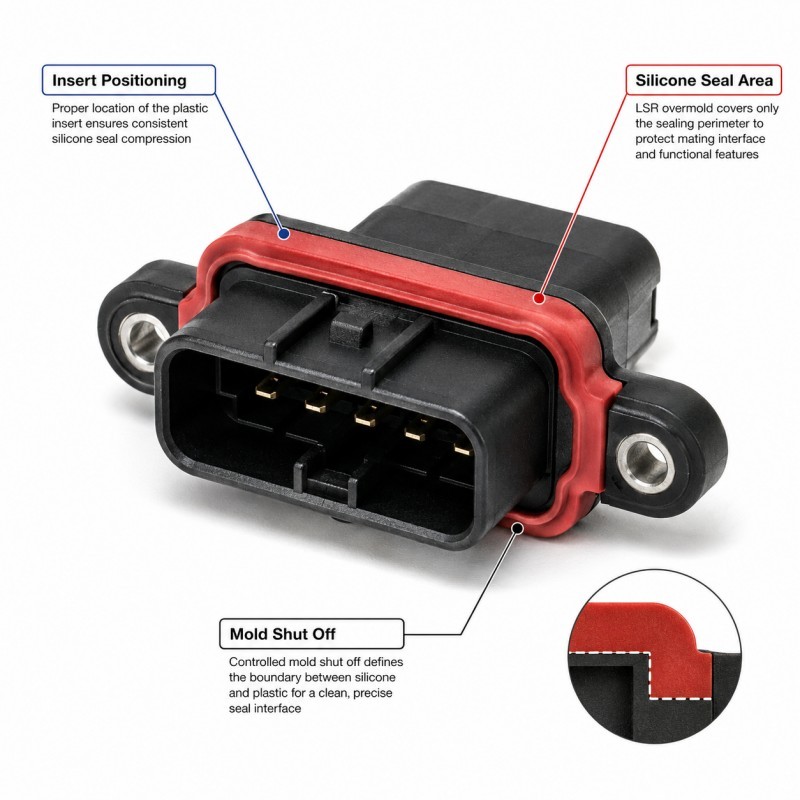
For example, in automotive connectors, silicone is normally applied around the sealing perimeter.
The connector opening and electrical contact area must remain clean without silicone contamination.
A poor insert design may cause:
• Uneven silicone thickness
• Poor sealing compression
• Assembly interference
• Increased tooling modification
Early DFM review helps identify these risks before mold manufacturing.
2. Silicone Coverage Area Must Match Functional Requirements
One common mistake is applying silicone everywhere instead of only where sealing or protection is required.
A reliable overmolding design defines:
• Silicone sealing area
• Non-silicone functional area
• Mold shut-off boundary
For electronic components:
Silicone should protect:
• Waterproof sealing zones
• Cable exit areas
• Flexible stress points
Silicone should not cover:
• Connector terminals
• Assembly interfaces
• Functional surfaces
Correct silicone coverage improves reliability and reduces unnecessary material cost.
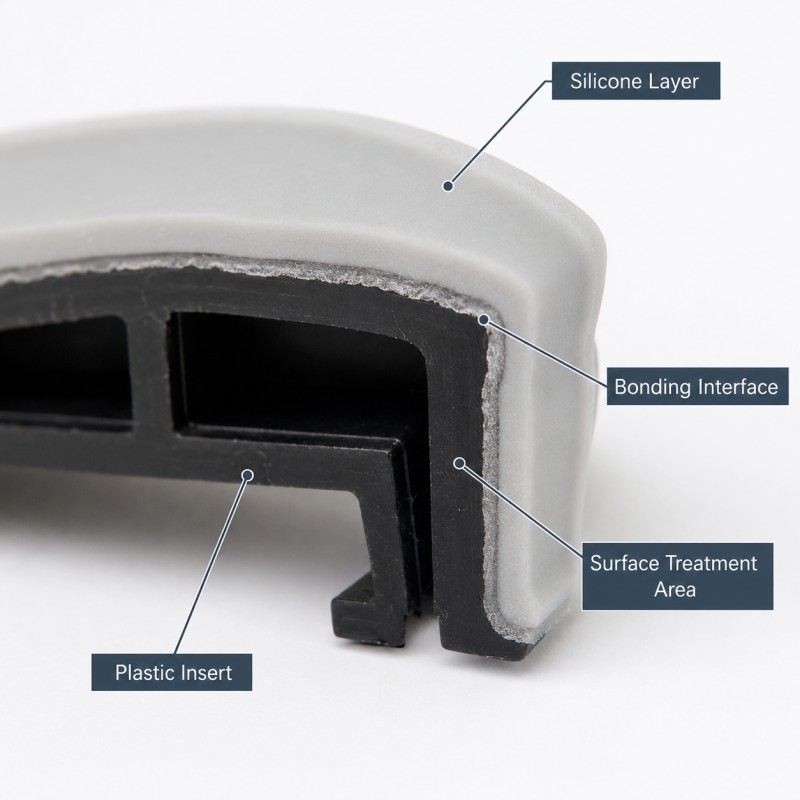
3. Bonding Between Silicone and Plastic Requires Engineering Design
Silicone does not automatically bond to every plastic material.
Common plastic substrates include:
• PC
• PA
• PPS
• ABS
Bonding performance depends on:
• Material compatibility
• Surface treatment
• Primer selection
• Injection parameters
Without proper bonding design, silicone may peel after:
• Thermal cycling
• Humidity exposure
• Mechanical stress
4. Mold Shut-Off Design Controls Silicone Flash
Liquid silicone rubber has excellent flow ability.
However, uncontrolled flow can create flash problems.
Mold shut-off areas define:
• Silicone stopping position
• Parting line quality
• Sealing edge accuracy
Poor shut-off design may cause:
• Excess silicone flash
• Assembly problems
• Unstable dimensions
Precision LSR molds require accurate machining and proper shut-off structures.
5. Venting Design Prevents Air Trap Defects
LSR injection molding requires proper venting because silicone flows through complex cavities.
Poor venting can create:
• Air bubbles
• Short shots
• Surface marks
• Incomplete filling
Vent position should be evaluated during mold design.
For precision silicone components, mold filling simulation and engineering experience are important.
6. Sealing Compression Must Be Considered Before Tooling
Many waterproof silicone components fail because compression design is incorrect.
Too little compression:
• Leakage risk increases
Too much compression:
• Silicone fatigue increases
• Assembly force increases
Engineers should evaluate:
• Seal geometry
• Silicone hardness
• Compression ratio
• Housing tolerance
Correct sealing design ensures long-term waterproof performance.
7. Prototype Approval Does Not Guarantee Mass Production
A prototype passing inspection does not always mean production success.
Mass production introduces:
• Material variation
• Tool wear
• Cycle variation
• Operator influence
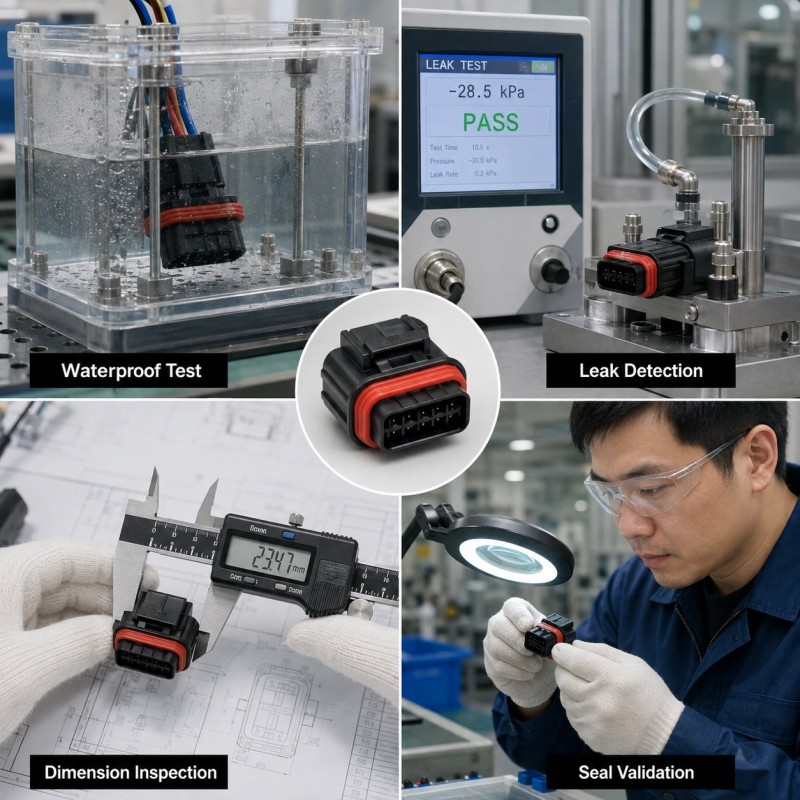
Before mass production, manufacturers should validate:
| Validation Item | Purpose |
Waterproof Test | Verify sealing performance |
| Adhesion Test | Check silicone bonding strength |
| Dimension Inspection | Confirm tolerance stability |
| Thermal Cycling | Evaluate durability |
8. Engineering Review Before Tooling Reduces Production Risk
A professional silicone overmolding project should start before mold manufacturing.
Engineering review should include:
• 3D model analysis
• Insert structure review
• Silicone flow evaluation
• Sealing design review
• Manufacturing feasibility
This process helps prevent:
• Tool modification
• Production delays
• Quality issues
• Unexpected costs
How SiliconePlus Supports Reliable Silicone Overmolding Manufacturing
SiliconePlus provides custom silicone manufacturing solutions including:
• LSR Injection Molding
• Silicone Overmolding
• Insert Molding
• Silicone Over Plastic
• Silicone Over Metal
• Silicone Over FPC
Our engineering team supports customers through:
• DFM review
• Tooling optimization
• Prototype validation
• Mass production quality control
For custom silicone components requiring waterproof sealing and stable production, early engineering collaboration helps reduce manufacturing risks.
FAQ
Why does silicone overmolding fail during production?
Silicone overmolding usually fails because of incorrect insert design, poor bonding structure, mold issues or insufficient production validation.
Can silicone bond with plastic?
Yes. Silicone can bond with suitable plastic substrates through proper material selection, surface treatment and optimized molding conditions.
What should be checked before LSR tooling?
Engineers should review insert positioning, silicone coverage, sealing structure, mold shut-off, venting and production requirements.
Conclusion
Successful silicone overmolding starts before tooling.
By reviewing insert design, bonding structure, sealing requirements and manufacturing feasibility early, companies can achieve more stable LSR production and avoid costly tooling modifications.
CTA
Need help reviewing your silicone overmolding design?
Send your 3D drawing, sample or application requirements to SiliconePlus for professional DFM support.