Why Is Silicone Overmolding Critical for Automotive Components?
- Share
- publisher
- Siliconeplus Editor
- Issue Time
- May 18,2026
Summary
Professional custom silicone overmolding solutions for automotive industry. We provide heat-resistant, waterproof, vibration-damping overmolded parts for EVs, traditional vehicles and charging infrastructure, fully compliant with IATF16949 and ISO standards.
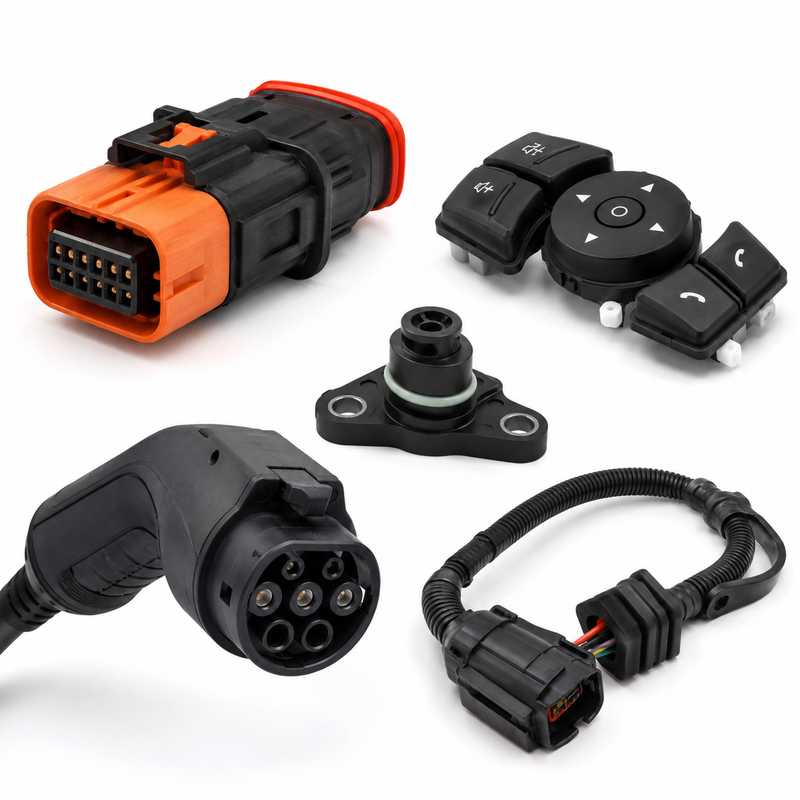
Modern automotive industry, especially the booming electric vehicle (EV) sector, demands components that can withstand extreme conditions, ensure reliable performance and enhance user safety. Silicone overmolding has emerged as the game-changing technology that bridges rigid substrates (metal, plastic) with soft silicone, creating integrated parts that deliver superior sealing, thermal resistance, vibration damping and electrical insulation—all essential for today's high-performance vehicles.
1. Core Advantages of Silicone Overmolding in Automotive Industry
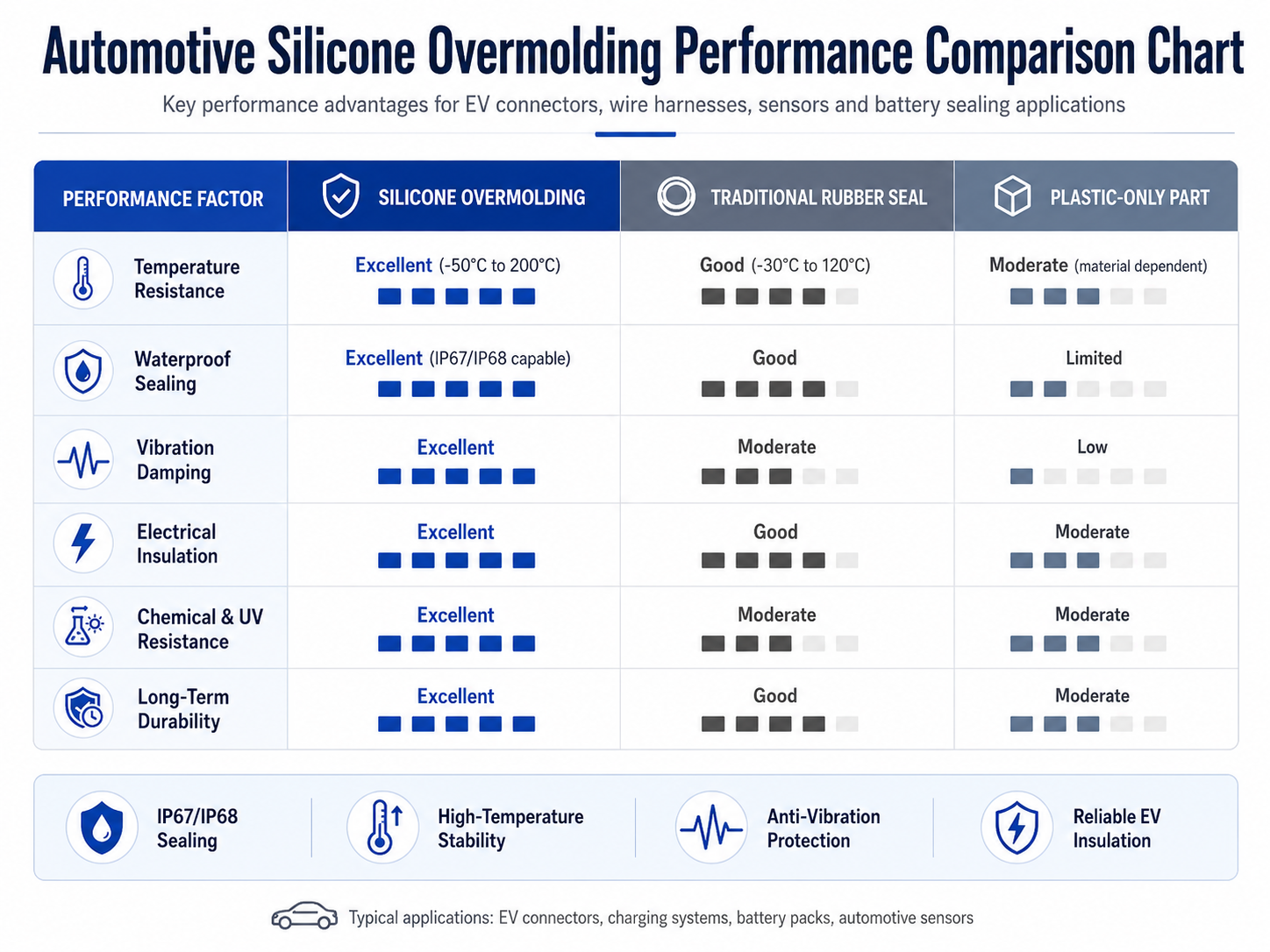
- Extreme Temperature ResistanceSilicone maintains flexibility from -50°C to 200°C, perfect for engine compartments, battery enclosures and charging systems exposed to drastic temperature fluctuations.
- Superior Sealing & WaterproofingHermetic overmolded structure eliminates gaps, achieving IP67/IP68 protection against water, dust, oil and road salt—critical for EV battery packs and electronic control units.
- Exceptional Vibration DampingSoft silicone layer absorbs mechanical vibrations, reducing noise, vibration and harshness (NVH) while protecting sensitive electronic components from damage.
- High Electrical InsulationPure automotive-grade silicone provides reliable insulation, preventing short circuits and electrical leakage in high-voltage EV systems.
- Chemical & Weather ResistanceResistant to automotive fluids, UV radiation, ozone and road chemicals, ensuring long-term durability even in harsh outdoor conditions.
- Enhanced Ergonomics & SafetyCustomizable soft-touch surface improves grip for controls while providing anti-slip properties for critical components.
2. Key Automotive Applications of Silicone Overmolding
2.1 Electric Vehicle (EV) Components
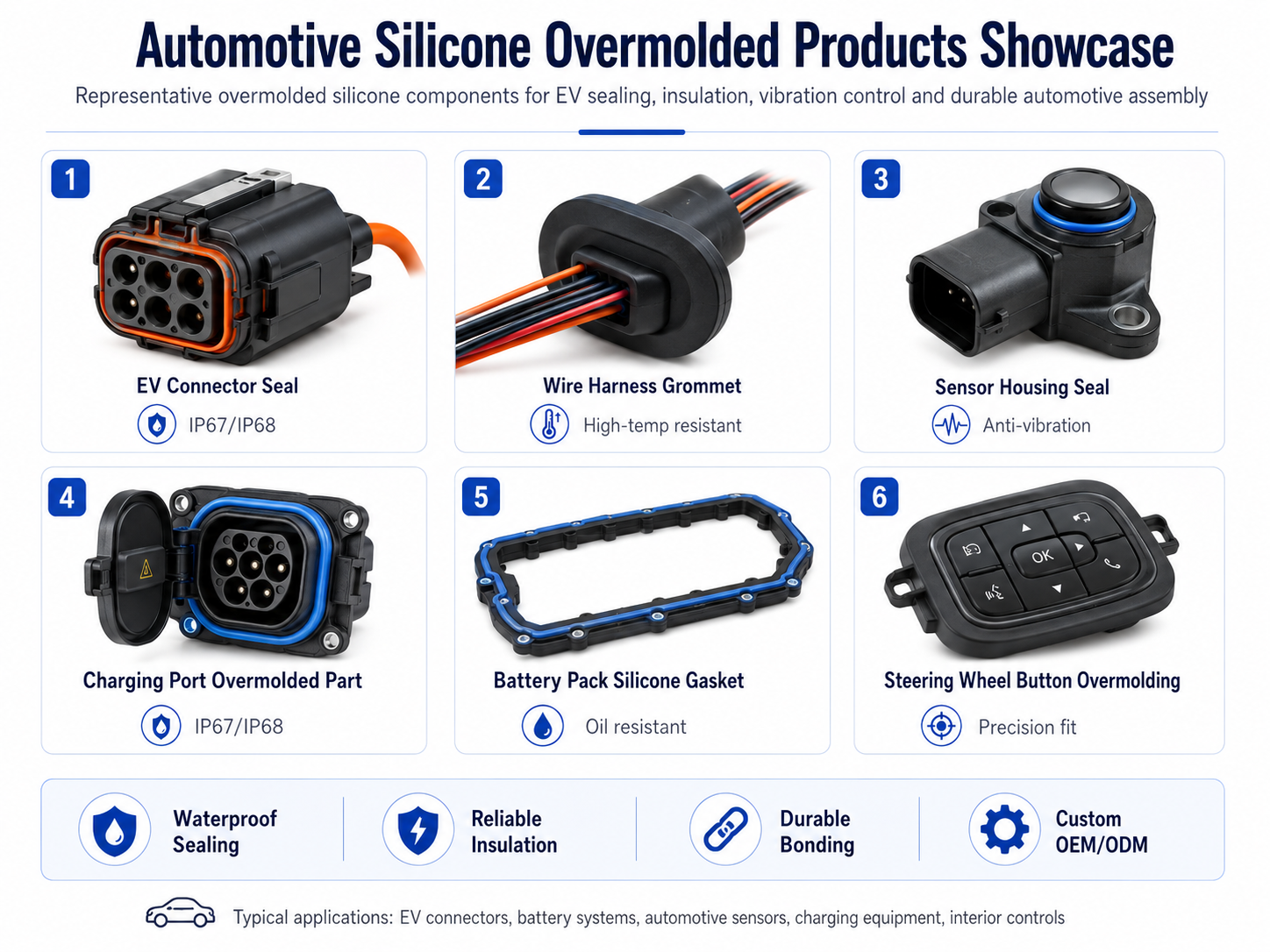
- Battery pack sealing gaskets and connectors
- High-voltage cable insulation and terminal overmolding
- Charging gun/PIN needle overmolding (resistant to arc corrosion)
- Battery management system (BMS) sensor protection
2.2 Automotive Electronics & Sensors
- Temperature/pressure sensor housing overmolding
- ECU (Electronic Control Unit) sealing components
- Infotainment system control buttons
- Camera and radar sensor waterproof enclosures
2.3 Interior & Exterior Trim
- Steering wheel control buttons with soft-touch overmolding
- Gear shift lever grips and knobs
- Door handle comfort zones
- Dashboard control panels with anti-slip silicone surfaces
2.4 Engine & Powertrain
- Wire harness connectors and seals
- Thermostat housing gaskets
- Turbocharger components with heat resistance
- Transmission system vibration dampers
2.5 Lighting Systems
- Headlight and taillight waterproof gaskets
- LED module sealing components
- Fog lamp vibration-resistant overmolding
2.6 Charging Infrastructure
- EV charger connector overmolding
- Charging station cable end protection
- Waterproof enclosures for charging point electronics
3. Solve Critical Automotive Overmolding Challenges
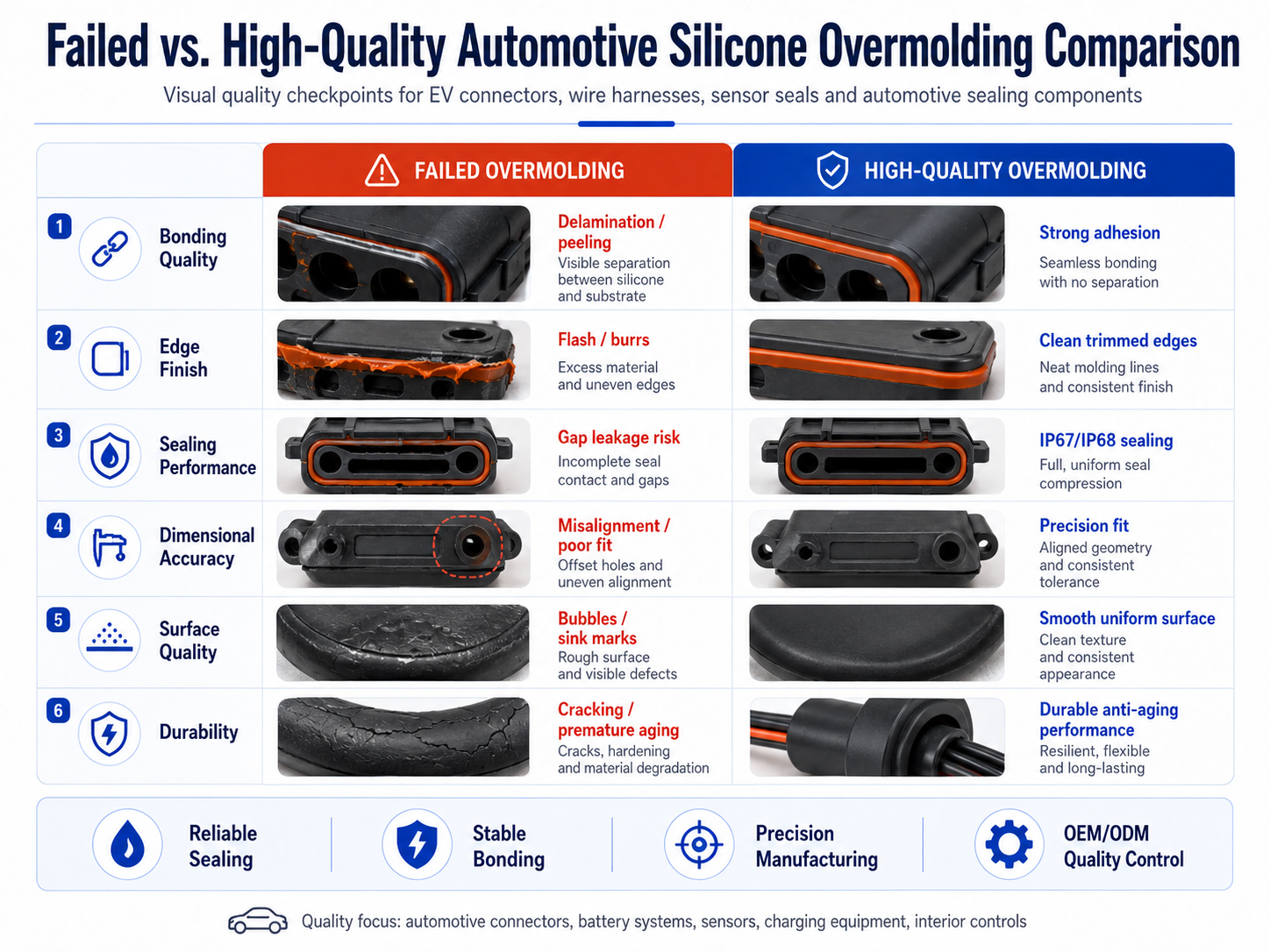
- Challenge 1: Poor Adhesion Leading to DelaminationWe use plasma surface treatment and automotive-grade bonding agents to ensure permanent adhesion between silicone and substrates, even under extreme temperature cycling.
- Challenge 2: Inconsistent Sealing PerformanceAdvanced mold flow simulation and precision tooling eliminate gaps, ensuring 100% waterproofing for critical EV components.
- Challenge 3: Failure to Meet Automotive StandardsAll products comply with IATF16949, ISO 9001 and RoHS regulations, with full traceability from raw material to finished product.
- Challenge 4: Short Lifespan in Harsh EnvironmentsHigh-quality LSR silicone with reinforced formulations ensures 10+ years of service life, even in constant exposure to heat, chemicals and UV radiation.
- Challenge 5: High-Voltage Safety ConcernsSpecialized insulation-grade silicone with high dielectric strength (≥20 kV/mm) protects against electrical hazards in EV systems.
4. Our Automotive Silicone Overmolding Expertise
- IATF16949 Certified Manufacturing—strict quality control system for automotive production
- LSR Specialization—ideal for high-precision, high-volume automotive component manufacturing
- Custom Material Formulation—tailored hardness (10-80 Shore A), color and properties for specific applications
- Rapid Prototyping—7-day sample delivery to accelerate new vehicle development cycles
- One-Stop Solution—from design optimization, mold making, sampling to mass production
- Full Compliance—meets automotive industry standards including UL94 V0, flame retardancy and halogen-free requirements