What Should You Include in an LSR Overmolding RFQ? 9 Details That Improve Quote Accuracy
- Share
- publisher
- SiliconePlus Engineering Team
- Issue Time
- Sep 4,2026
Summary
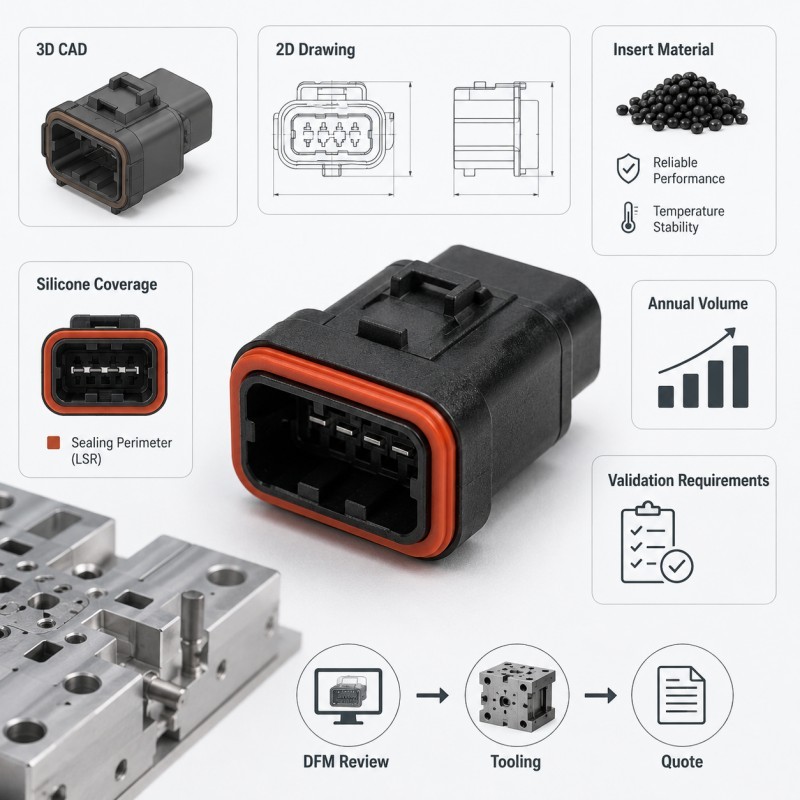
A complete LSR overmolding RFQ should include 3D CAD, substrate material, silicone coverage, no-silicone zones, material requirements, expected volume and validation criteria. Providing these details helps manufacturers evaluate tooling, molding risks and production cost more accurately.
Answer Excerpt
An accurate LSR overmolding quote requires more than a product photo or target unit price.
For an LSR injection molding or silicone overmolding project, the manufacturer should understand the part geometry, substrate material, silicone coverage, functional no-silicone zones, silicone requirements, production volume and validation conditions before evaluating tooling and manufacturing cost.
A complete RFQ helps the engineering team identify mold complexity, insert-loading requirements, shut-off risks, inspection needs and production strategy before tooling begins.
If some information is not finalized yet, clearly identify what is confirmed and what still requires DFM review rather than guessing specifications.
Why Does RFQ Quality Affect LSR Overmolding Quote Accuracy?
Two silicone overmolded parts can look similar in a product photo but require very different manufacturing systems.
A quotation may change significantly depending on:
• Tooling complexity
• Insert positioning
• Mold shut-off requirements
• Cavity count
• Silicone wall thickness
• Functional openings
• Inspection requirements
• Automation potential
• Expected production volume
For example, a simple silicone cap and an overmolded electronic connector may use similar amounts of silicone.
However, the connector may require precision insert loading, multiple protected functional areas and tighter shut-off control.
That is why the RFQ should describe the actual engineering structure instead of asking for a price based only on part dimensions or weight.
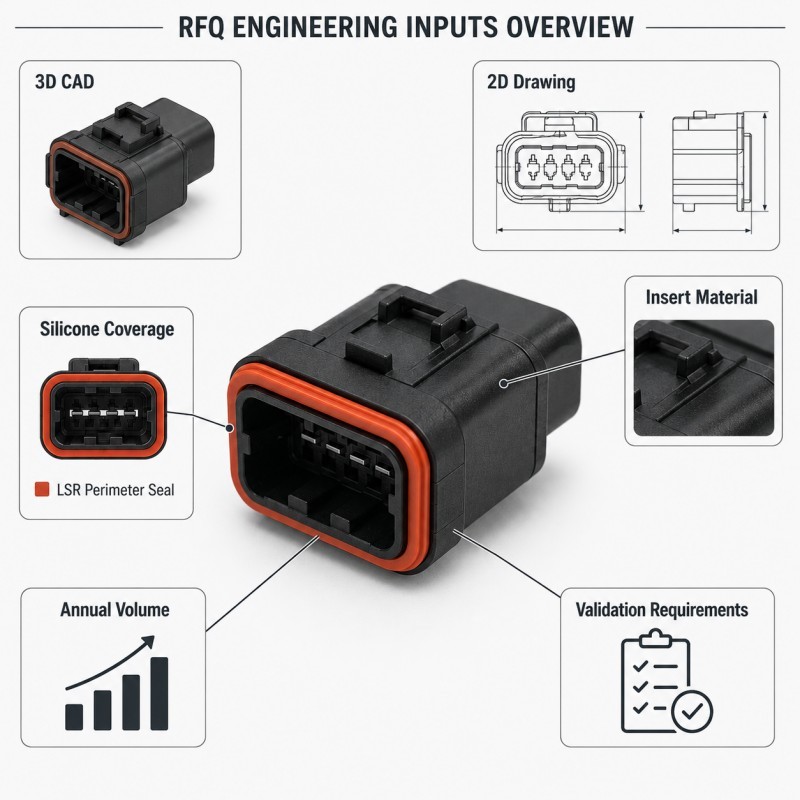
1. Provide the 3D CAD and 2D Drawing
The 3D CAD is one of the most useful files for an LSR overmolding quotation.
A STEP or STP model allows the engineering team to review:
• Overall geometry
• Silicone wall thickness
• Insert structure
• Undercuts
• Mold-opening direction
• Shut-off locations
• Potential tooling complexity
The 2D drawing should identify dimensions and requirements that cannot be understood from the 3D model alone.
Typical drawing information may include:
• Critical dimensions
• Tolerances
• Functional surfaces
• Cosmetic areas
• Material information
• Special inspection requirements
Do not apply tight tolerances to every dimension unless the function actually requires them.
Unnecessary tolerance requirements can increase tooling and inspection complexity without improving product performance.
2. Identify the Insert Material Clearly
For silicone overmolding, the rigid insert is part of the molding system.
The RFQ should specify whether the substrate is:
• Plastic
• Metal
• FPC
• Cable or wire assembly
• Another pre-molded component
For plastic inserts, provide the actual resin grade when possible rather than writing only “plastic.”
PC, PA, PBT, PPS and other engineering plastics can behave differently during LSR overmolding.
For metal inserts, material grade, surface finish, coating or plating may also affect manufacturing decisions.
The substrate information helps the manufacturer evaluate bonding strategy, thermal behavior, insert positioning and mold shut-off.
3. Define Silicone Coverage and No-Silicone Zones
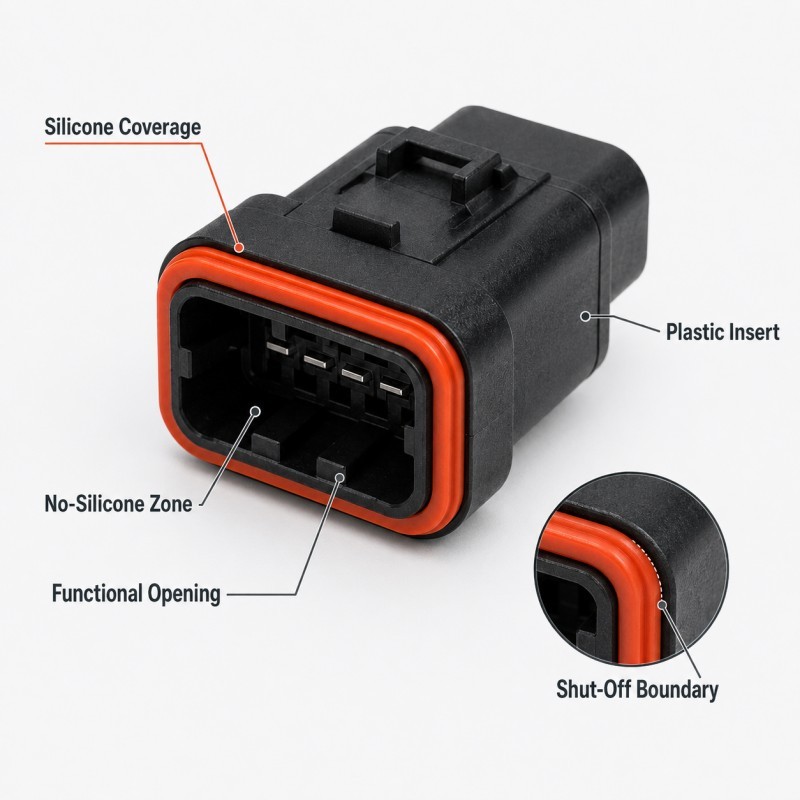
A screenshot with a colored silicone area can be useful, but the final RFQ should define the coverage boundary from stable product features.
Clearly identify:
• Where silicone starts
• Where silicone stops
• Which surfaces must remain exposed
• Which openings must remain free of silicone
• Which areas require sealing contact
No-silicone zones are especially important around:
• Connector interfaces
• Electrical contacts
• Sensors
• Screw or assembly features
• Optical areas
• Mating surfaces
These boundaries directly affect mold shut-off design.
If the silicone boundary is unclear, the supplier may quote a tooling concept that does not match the final product requirement.
4. Specify Silicone Material Requirements Without Over-Specifying
If the silicone material has already been selected, include the relevant specification in the RFQ.
Useful information may include:
• Silicone hardness
• Color
• Transparency
• Required material grade
• Environmental resistance
• Surface texture
If the exact material has not been finalized, describe the functional requirement instead.
For example:
• Soft-touch contact
• Waterproof sealing
• Electrical insulation
• Cushioning
• Anti-slip performance
• Temperature resistance
This allows the manufacturer to recommend a suitable LSR system instead of forcing an unnecessary specification too early in development.
5. Explain the Functional Requirement
The supplier needs to understand what the silicone is expected to do.
A silicone overmold may provide:
• Waterproof sealing
• Strain relief
• Cushioning
• Soft-touch contact
• Insulation
• Anti-slip performance
• Mechanical retention
A sealing component should also identify the mating structure where possible.
For example, if the silicone must compress against another housing, provide the mating-part drawing or assembly information.
This helps the engineering team evaluate the seal path, compression condition and tolerance stack rather than reviewing the overmolded part in isolation.
6. Provide Prototype, Initial Order and Annual Volume
Production volume affects both tooling strategy and unit-price evaluation.
The RFQ should ideally separate:
• Prototype quantity
• Initial production quantity
• Expected annual volume
A project requiring a few hundred parts per year may use a different cavity and loading strategy from a project requiring hundreds of thousands of parts.
Volume can influence:
• Cavity count
• Manual versus automated insert loading
• Tooling investment
• Inspection strategy
• Packaging method
• Production efficiency
Do not provide only the first purchase order quantity if you already know the expected annual demand.
7. Define Validation and Acceptance Requirements
Validation requirements should be discussed before the quotation is finalized.
Depending on the product, requirements may include:
• Dimensional inspection
• Appearance inspection
• Adhesion or peel testing
• Pull testing
• Waterproof or leak testing
• Thermal cycling
• Assembly verification
The test condition matters.
For example, “waterproof required” is less useful than providing the actual product test method, pressure condition, immersion condition or customer acceptance specification.
The manufacturer can then evaluate whether additional fixtures, testing time or inspection resources should be included in the production plan.
8. Tell the Supplier What Is Still Open for DFM
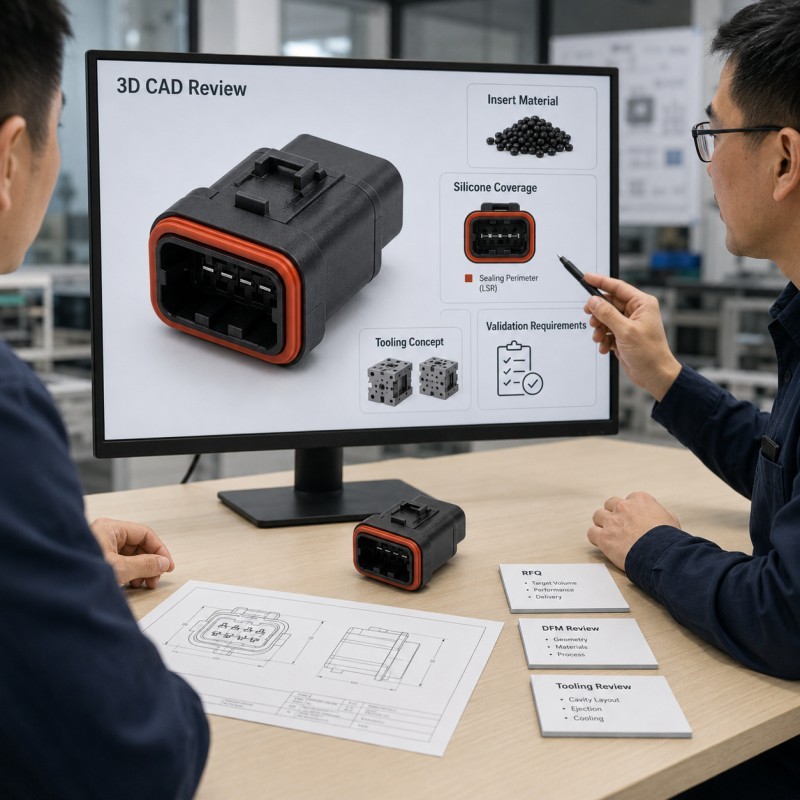
An RFQ does not need to contain every final engineering decision.
In early development, some items may still be open.
Examples include:
• Final silicone hardness
• Retention method
• Gate location
• Parting line location
• Local wall thickness
• Tool cavity count
Instead of guessing these details, clearly identify them as items for engineering review.
This allows the manufacturer to provide DFM recommendations before tooling is released.
Early DFM is particularly useful when the product includes difficult inserts, functional no-silicone zones, thin sealing structures or tight assembly interfaces.
9. Confirm Who Supplies the Insert
For an overmolding project, the RFQ should clarify how the insert will be supplied.
Possible arrangements include:
• Customer supplies the insert
• Manufacturer purchases the insert
• Manufacturer produces the insert through an approved supply chain
• Manufacturer receives partially assembled components
This matters because incoming insert quality directly affects overmolding stability.
The quotation may need to consider:
• Insert inspection
• Storage
• Cleaning
• Handling
• Loading
• Scrap responsibility
Clarifying the supply scope early prevents misunderstandings when the project moves from sampling to mass production.
LSR Overmolding RFQ Checklist
| RFQ Item | What to Provide | Why It Matters |
3D CAD | STEP / STP model | Tooling and geometry review |
2D Drawing | Dimensions and tolerances | Critical requirement definition |
Insert Material | Exact resin or metal grade | Bonding and process evaluation |
Silicone Coverage | Defined molding boundary | Shut-off and tooling design |
No-Silicone Zones | Functional keep-out areas | Prevent silicone intrusion |
Silicone Requirement | Hardness, color, function | Material selection |
| Production Volume | Sample + annual demand | Cavity and automation planning |
| Validation | Test methods and acceptance | Quality and quotation accuracy |
| Supply Scope | Who provides the insert | Cost and production planning |
How SiliconePlus Supports LSR Overmolding RFQs
SiliconePlus supports custom LSR injection molding and silicone overmolding projects from early engineering review through tooling, sampling and mass production.
Project review can include:
• 3D CAD and drawing review
• Insert-material assessment
• Silicone coverage review
• No-silicone-zone analysis
• Insert positioning review
• Mold shut-off evaluation
• Gate and venting review
• Tooling concept discussion
• Prototype and pilot-production support
• Dimensional and functional validation
For projects that require custom tooling, our silicone mold design and tooling review can help evaluate cavity strategy, insert positioning, shut-off surfaces, gate location, venting and manufacturability before mold steel is finalized.
A complete RFQ allows the engineering team to evaluate the actual manufacturing requirements instead of quoting from assumptions.
FAQ
Can I Request an LSR Overmolding Quote From a Product Photo?
A photo can be useful for initial discussion, but accurate tooling and production evaluation normally requires CAD, substrate information and functional requirements.
Do I Need to Finalize the Silicone Hardness Before RFQ?
Not always. If hardness is still open, provide the required function and contact condition so it can be reviewed during DFM.
Should I Include Annual Volume Even for Prototype Quotation?
Yes. Expected annual volume helps determine whether the future production strategy may require additional cavities or automation.
What Is the Most Important Information for an Overmolding RFQ?
The most important information is the actual product structure: CAD, insert material, silicone coverage, no-silicone zones, functional requirements and production volume.
Conclusion
A good LSR overmolding RFQ does more than ask for a mold price and part price.
It gives the manufacturer enough engineering information to understand:
• What must be molded
• What must remain exposed
• What the silicone must do
• How the insert will be handled
• How the part will be inspected
• How much production is expected
The earlier these requirements are defined, the easier it becomes to compare quotations based on a realistic manufacturing scope rather than incomplete assumptions.
Planning an LSR Overmolding Project?
If you are preparing an LSR overmolding RFQ, send your 3D CAD, 2D drawing, substrate information, silicone coverage, expected annual volume and validation requirements to the SiliconePlus engineering team.
We can review the manufacturing requirements before tooling and help identify missing information that may affect mold design, quotation accuracy or mass-production reliability.