What Is Silicone Overmolding? A Complete Guide to LSR Over Plastic, Metal and FPC Applications
- Share
- publisher
- SiliconePlus Engineering Team
- Issue Time
- Sep 8,2026
Summary
Silicone overmolding combines liquid silicone rubber with plastic, metal or flexible substrates to create integrated functional components. This guide explains how LSR overmolding works, including material selection, insert preparation, mold design, silicone coverage control and production validation.
Answer Excerpt
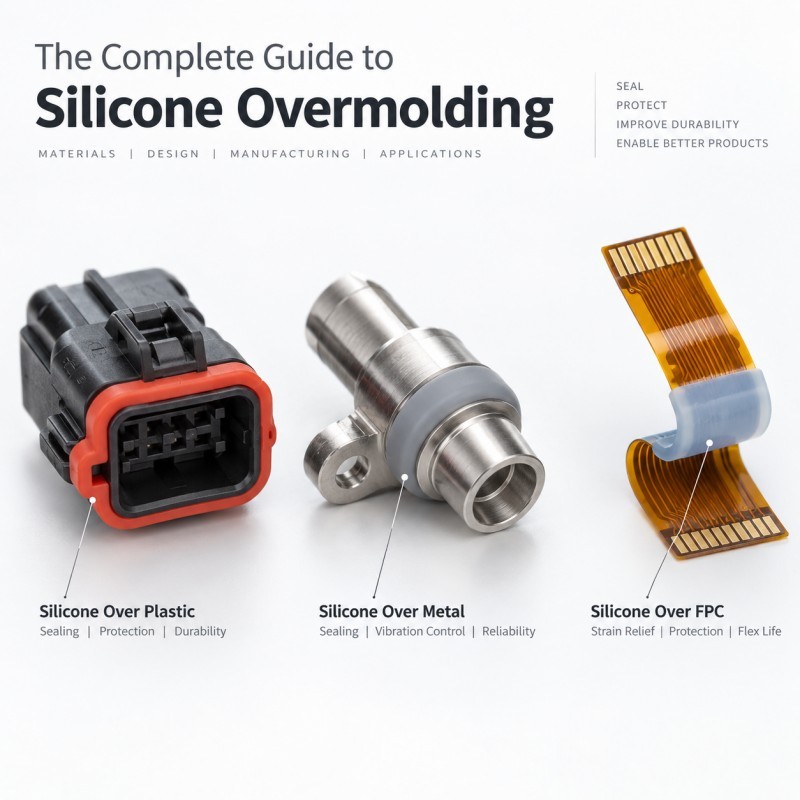
Silicone overmolding is a manufacturing process that combines liquid silicone rubber (LSR) with another substrate such as plastic, metal or flexible materials to create a single integrated component.
Unlike traditional silicone molding, overmolding requires precise control of the interface between silicone and the insert material.
A successful silicone overmolding project depends on:
• Material compatibility
• Insert positioning
• Silicone coverage design
• Mold shut-off structure
• Venting and filling control
• Production validation
For engineers developing waterproof, flexible or protective components, understanding the overmolding process before tooling can significantly reduce manufacturing risks.
How Does Silicone Overmolding Work?
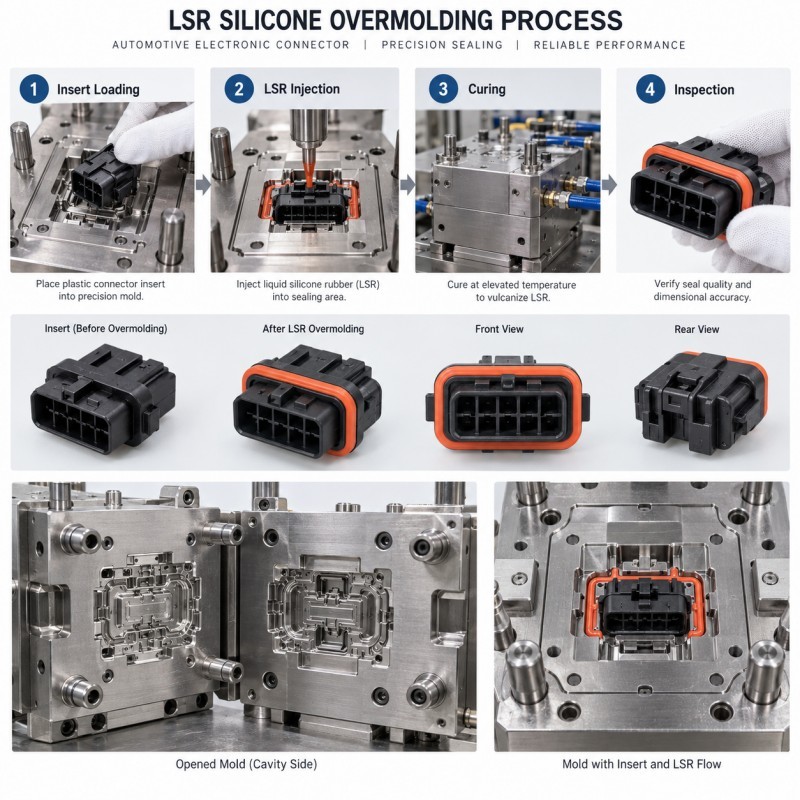
The silicone overmolding process usually starts with a rigid or flexible substrate that is positioned inside a precision mold.
During LSR injection molding, liquid silicone rubber flows into the cavity and forms around the insert according to the designed silicone coverage area.
The general process includes:
• Insert preparation
• Insert loading
• Mold closing
• LSR injection
• Silicone curing
• Part removal
• Quality inspection
The final component combines the advantages of different materials.
For example:
Plastic provides structural support.
Silicone provides sealing, flexibility and protection.
Metal provides strength and electrical or mechanical functionality.
LSR Overmolding Applications
LSR overmolding is widely used when a product requires both rigid structure and soft silicone performance.
Common applications include:
• Automotive electronic connectors
• EV charging components
• Medical device components
• Wearable device parts
• Consumer electronics sealing components
• Industrial waterproof components
Typical functions include:
• Waterproof sealing
• Shock absorption
• Soft-touch surfaces
• Environmental protection
• Electrical insulation
The silicone area should always be designed according to the functional requirement rather than simply covering the entire substrate.
Silicone Over Plastic Applications
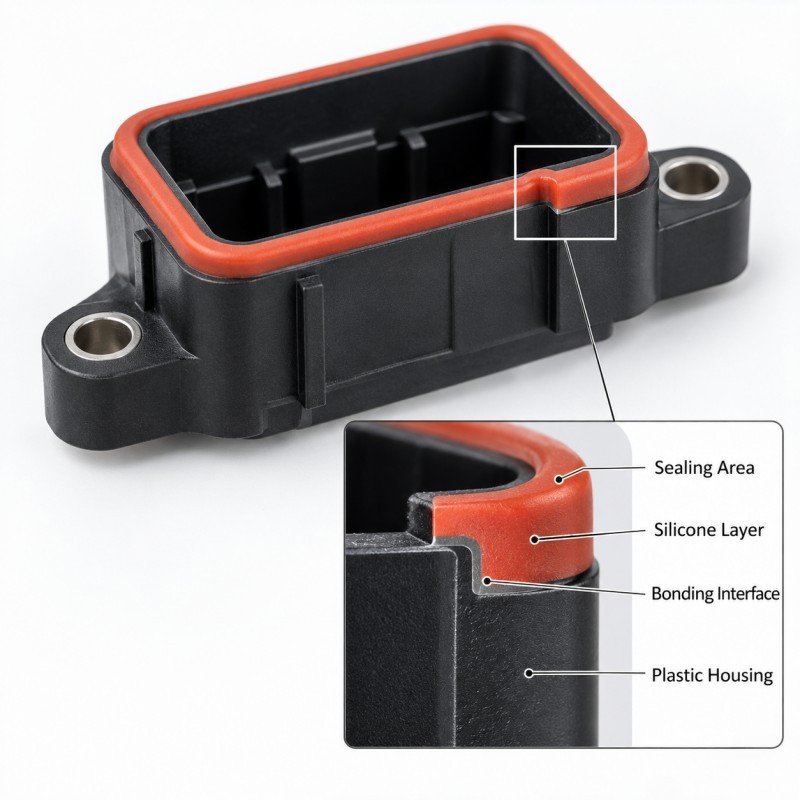
Silicone over plastic is one of the most common LSR overmolding applications.
The plastic substrate provides dimensional stability while silicone creates sealing and protective functions.
Common plastic materials include:
• PC
• PA
• PPS
• ABS
During design, engineers should evaluate:
• Plastic shrinkage
• Bonding performance
• Surface preparation
• Silicone thickness
• Assembly requirements
Silicone Over Metal Applications
Silicone over metal combines the strength of metal inserts with the flexibility and sealing ability of silicone.
Typical applications include:
• Metal threaded inserts
• Sensor components
• Electronic housings
• Industrial sealing parts
Important design considerations include:
• Metal surface preparation
• Insert positioning
• Silicone sealing area
• Mechanical retention
• Thermal expansion difference
Proper interface design helps prevent separation during assembly and environmental cycling.
Silicone Over FPC and Flexible Components
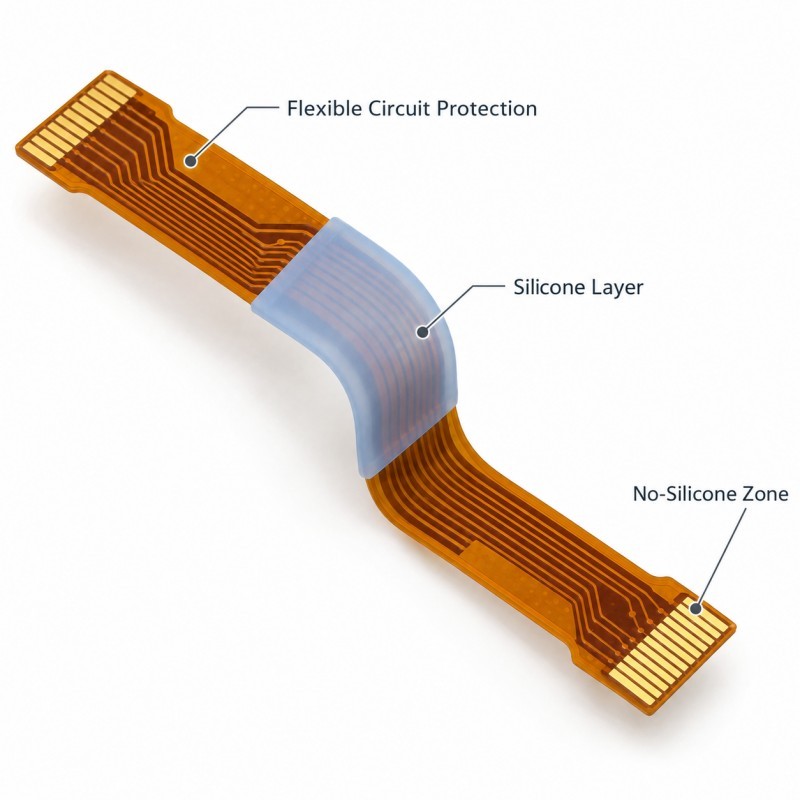
Silicone over FPC applications require precise control because flexible circuits are sensitive components.
The silicone layer may provide:
• Mechanical protection
• Waterproof sealing
• Strain relief
• Flexible support
During manufacturing, engineers must define:
• Silicone coverage area
• Functional no-silicone zones
• Bending requirements
• Electrical protection requirements
Incorrect silicone placement may affect assembly or product functionality.
Key Engineering Factors Before Silicone Overmolding Tooling
Before tooling begins, engineers should review several critical factors.
Insert Design
The insert must have stable positioning features to maintain consistent silicone thickness.
Silicone Coverage
Only required functional areas should receive silicone coverage.
Mold Shut-Off
The mold must accurately control silicone boundaries.
Venting
Proper venting prevents incomplete filling and surface defects.
Validation
Testing requirements should be defined before mass production.
SiliconePlus Silicone Overmolding Capability
SiliconePlus provides custom silicone overmolding solutions from engineering review to mass production.
Capabilities include:
• LSR injection molding
• Silicone over plastic
• Silicone over metal
• Silicone over FPC
• Insert molding
Engineering support includes:
• DFM review
• Mold design optimization
• Prototype validation
• Mass production quality control
For projects requiring waterproof sealing, flexible protection or integrated silicone components, early engineering collaboration helps reduce tooling risks.
FAQ
What Materials Can Be Used For Silicone Overmolding?
Silicone overmolding can combine LSR with materials such as PC, PA, PPS, ABS, metal inserts and flexible components depending on the application requirements.
Is Silicone Overmolding Waterproof?
Yes. Silicone overmolding is commonly used for waterproof sealing applications when silicone geometry, compression design and mold control are properly designed.
What Is The Difference Between Silicone Molding And Silicone Overmolding?
Traditional silicone molding creates a single silicone component, while silicone overmolding combines silicone with another substrate to create a multi-material functional part.
Conclusion
Silicone overmolding enables engineers to combine the advantages of silicone with plastic, metal and flexible substrates.
However, successful production depends on more than the molding process itself.
Material selection, insert design, silicone coverage, tooling structure and validation should all be considered before production begins.
A reliable LSR overmolding manufacturer helps transform product concepts into stable mass-production components.
Need a Custom Silicone Overmolding Solution?
If you are developing silicone overmolded components, send your 3D drawing, substrate information and application requirements to the SiliconePlus engineering team for evaluation.