The Impact of Material Selection in Silicone Overmolding: Insights from Top Factories
- Share
- publisher
- siliconeplus
- Issue Time
- Dec 30,2025
Summary
Strategic silicone material selection is critical to overmolding success, directly impacting adhesion, durability, safety, and long-term performance.
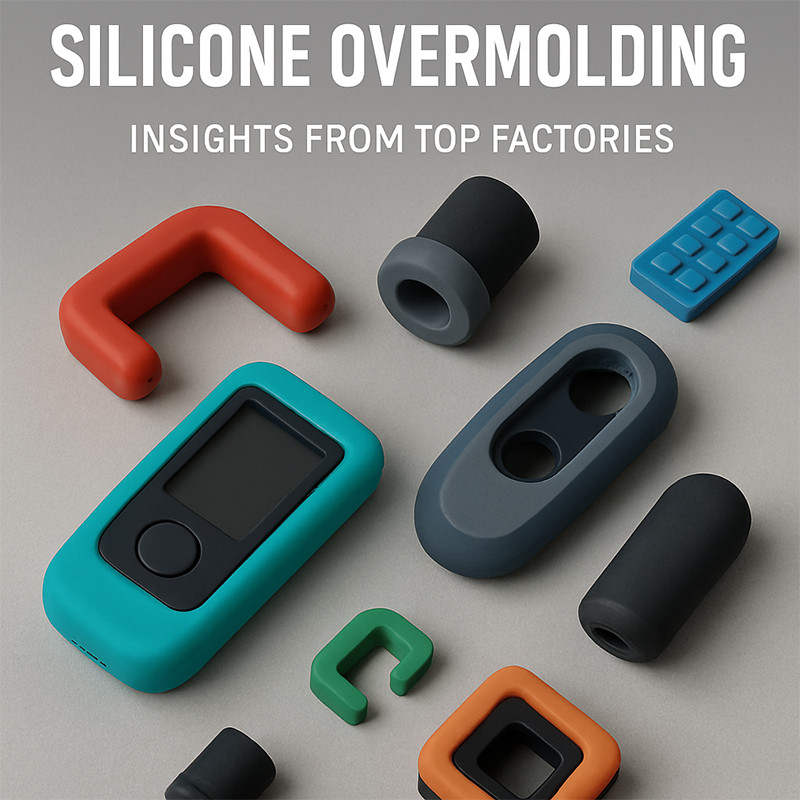
Introduction: The Critical Role of Material Selection in Silicone Overmolding
Silicone overmolding has become a cornerstone in manufacturing high-performance, durable, and flexible components across industries such as healthcare, consumer electronics, automotive, and aerospace. The selection of the right silicone material is not merely a preliminary step but a decisive factor that influences the entire lifecycle of the final product. From enhanced durability and chemical resistance to biocompatibility and aesthetic appeal, the material choices made at the outset can determine success or failure.
Leading factories worldwide emphasize rigorous material testing, comprehensive material property analysis, and strategic supplier partnerships to ensure optimal overmolding outcomes. In this article, we provide an in-depth exploration of how material selection impacts silicone overmolding, supported by insights from top manufacturing facilities renowned for their expertise and innovation.
Understanding Silicone Overmolding: A Brief Overview
Silicone overmolding involves the process of molding a layer of silicone rubber over a substrate or core material, creating a composite component with enhanced properties.
The process typically involves:
Preparation of the substrate (plastic, metal, or other materials)
Application of silicone via injection molding or compression molding
Curing and finishing to achieve desired mechanical and aesthetic qualities
The success of this process is heavily dependent on the compatibility between the substrate and the silicone material, as well as the processing conditions.
Key Factors in Silicone Material Selection
1. Mechanical Properties and Flexibility
Choosing a silicone with appropriate Shore hardness ensures the final product exhibits the desired flexibility and resilience. Soft silicones (Shore A 10-30) are often used in wearables and medical devices, whereas harder silicones (Shore A 50-70) are suitable for protective casings and industrial applications.
2. Chemical and Environmental Resistance
The selected silicone must withstand chemical exposure, UV radiation, temperature fluctuations, and moisture. For outdoor or industrial applications, highly resistant silicone formulations are essential to prevent degradation over time.
3. Biocompatibility and Safety
In medical and food-contact applications, medical-grade silicones that meet strict FDA and ISO standards are mandatory. Material purity and low extractables are critical considerations.
4. Adhesion Compatibility
The adhesion between silicone and the substrate depends on the chemical compatibility. Some silicones require primers or surface treatments to enhance bonding, especially with metal or plastic substrates.
5. Processability and Curing Characteristics
Materials should be chosen based on curing time, temperature requirements, and flow characteristics to ensure efficient manufacturing and consistent quality.
Material Types and Their Impact on Overmolding Outcomes
| Material Type | Typical Applications | Advantages | Limitations |
Room Temperature Vulcanizing (RTV) Silicone | Medical devices, electronics | Easy to process, excellent detail reproduction | Lower mechanical strength |
High-Consistency Rubber (HCR) | Automotive, industrial | Superior durability, high tear strength | Longer curing times, higher processing temperature |
| Addition Cure Silicone (Platinum-cure) | Medical, food contact | High purity, excellent biocompatibility | More expensive, sensitive to contamination |
| Condensation Cure Silicone | General industrial use | Cost-effective, good adhesion | Potential for shrinkage and by-products
|
Insights from Top Silicone Manufacturing Factories
Rigorous Material Testing and Validation
Leading factories prioritize extensive testing of silicone formulations, including tensile strength, elongation, compression set, and chemical resistance. They utilize accelerated aging tests to predict long-term performance, ensuring that the chosen material withstands real-world conditions.
Collaborative Material Development
Top manufacturers often collaborate with material suppliers to develop custom silicone formulations tailored for specific applications. These bespoke formulations optimize adhesion, flexibility, and resistance properties, providing a competitive edge.
Surface Treatment and Priming Techniques
To enhance adhesion between silicone and various substrates, factories employ advanced surface treatments such as plasma treatment, silane coupling agents, and primer coatings. These techniques significantly improve bond strength and product reliability.
Process Optimization for Material Compatibility
The factories emphasize precise control over processing parameters, including temperature, pressure, and curing time. Proper process control ensures uniform curing, minimized defects, and consistent material properties.
Case Studies: Material Selection Impact in Real-World Applications
In high-stakes medical applications, biocompatible platinum-cure silicones are selected for their non-toxicity and long-term stability. Factories report that material purity and surface finish directly correlate with patient safety and device lifespan.
Consumer Electronics
For waterproof and shock-resistant gadgets, high-performance addition cure silicones with UV resistance are chosen. Proper material selection has resulted in significantly reduced warranty claims and enhanced user satisfaction.
In automotive applications, silicones with high temperature resistance and abrasion resistance are critical. Factories highlight that material choice directly impacts component durability in harsh environments, reducing maintenance costs and failure rates.
Emerging Trends and Future Directions in Silicone Material Selection
Nanocomposite Silicones: Incorporating nanoparticles enhances mechanical strength and thermal conductivity.
Eco-Friendly Silicone Formulations: Development of biodegradable and low-VOC silicones aligns with sustainability goals.
Smart Silicone Materials: Embedding sensors or conductive fillers for responsive and interactive components.
Conclusion: Strategic Material Selection as the Foundation of Superior Silicone Overmolding
The success of silicone overmolding hinges on meticulous material selection tailored to specific application requirements. Top factories demonstrate that comprehensive testing, collaborative development, and advanced surface treatments are essential to achieving optimal bonding, durability, and performance.
By understanding the intricate interplay of material properties and processing techniques, manufacturers can maximize product quality, reduce costs, and accelerate time-to-market. The evolving landscape of silicone materials presents exciting opportunities for innovation, provided that material selection remains a strategic priority.
Website:www.siliconeplus.net
Email:sales11@siliconeplus.net.
Phone:13420974883
Wechat:13420974883