LSR Overmolding vs Silicone Potting: Which Fits Your PCB Protection Design?
- Share
- publisher
- SiliconePlus Engineering Team
- Issue Time
- Nov 10,2026
Summary
LSR overmolding and silicone potting protect electronic assemblies in different ways. This guide compares their process, geometry, tooling and design requirements so OEM teams can decide whether a molded silicone cover or a dispensed encapsulant better fits the PCB, housing and validation plan.
Answer Excerpt
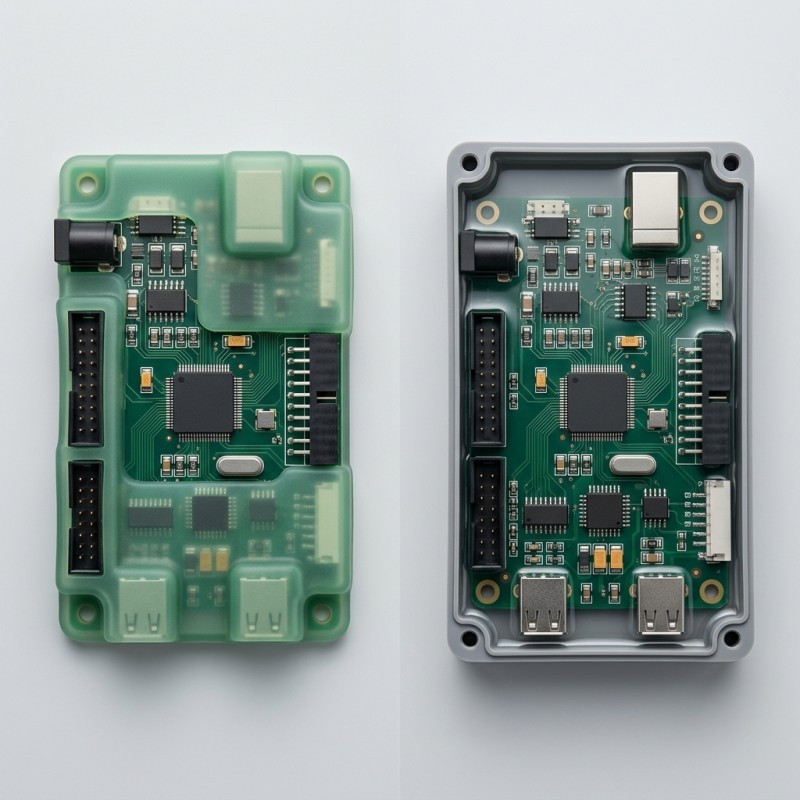
LSR overmolding and silicone potting are different PCB protection methods. LSR overmolding forms silicone directly on a positioned PCB, FPC or carrier inside a mold. Silicone potting dispenses a liquid encapsulant into an enclosure and cures around components.
Choose according to the required geometry, component access, assembly design and process limits. Neither method is automatically better for every electronic product.
The SiliconePlus product catalog lists a custom LSR-overmolded PCB silicone cover for drawing-based development.
How Are LSR Overmolding and Silicone Potting Different?
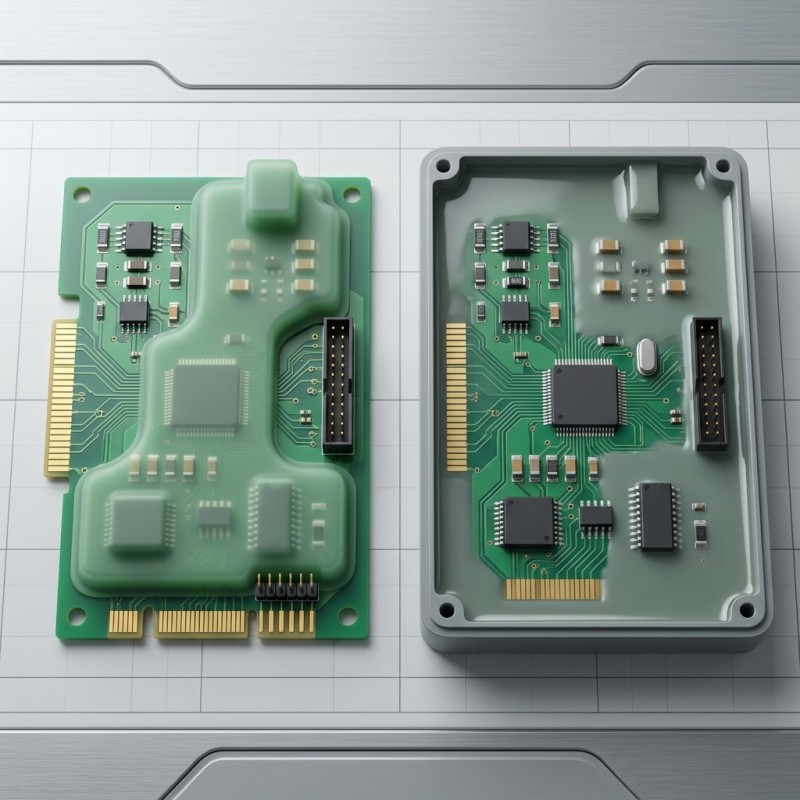
LSR overmolding is a shape-making process. The PCB, FPC or rigid carrier is positioned in a mold, and silicone is formed on selected areas. The design can include a defined cover edge or sealing feature when required.
Silicone potting is a filling process. Liquid encapsulant is dispensed into a cavity or around selected components, then cured in place.
For projects using flexible circuits or plastic carriers, review our FPC silicone overmolding solutions and plastic with silicone overmolding capabilities.
Which Method Fits Your PCB Assembly?
| Design requirement | LSR overmolding | Silicone potting |
Defined cover geometry | Suitable when a controlled molded shape is required | Depends on the enclosure and filling design |
Integrated sealing feature | Can form a designed silicone feature | Depends on the cavity and mating structure |
| Complex component layout | Requires insert support and component clearance | Requires suitable flow and void-control planning |
| Assembly access | Must preserve required interfaces and access areas | Must consider which components or areas will be covered |
| Process compatibility | Review molding exposure and mechanical loading | Review dispensing, curing and material compatibility |
What Should Be Checked Before LSR Tooling?
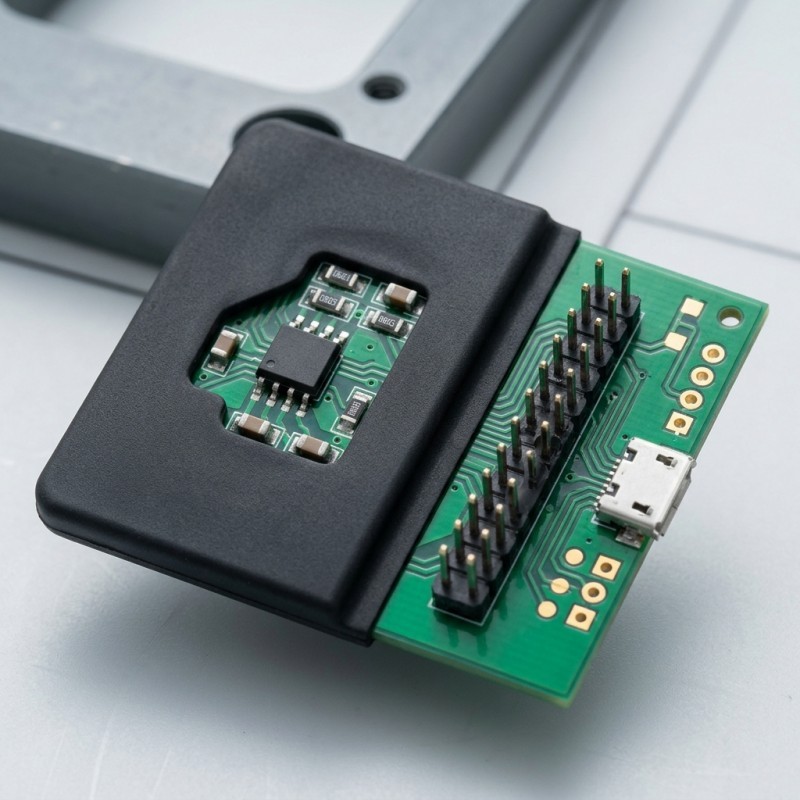
Before choosing LSR overmolding, review the complete electronic assembly rather than only the PCB outline.
Key information includes:
1. PCB or FPC construction, board thickness and component heights.
2. Connector, switch and sensor areas that must remain accessible.
3. Intended silicone coverage and areas that must remain uncovered.
4. Available support locations and the final housing interface.
5. Process-exposure limits of mounted components and assembly materials.
6. Required functional and environmental validation criteria.
For more detail, review PCB support and component clearance before tooling. Also consider the actual liquid silicone injection molding process and its compatibility with the assembled electronics.
A Simple Selection Rule
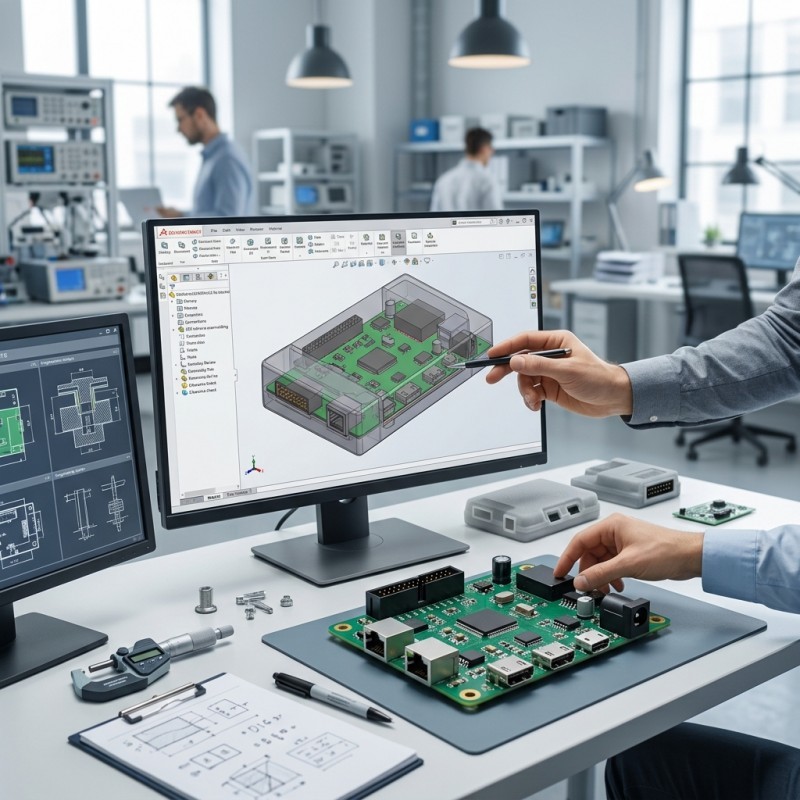
Choose LSR overmolding when your product needs a defined molded silicone structure on a positioned carrier.
Consider silicone potting when the main requirement is to fill an enclosure around electronic components.
If the design only needs a thin protective film on the circuit board, conformal coating may also be worth evaluating.
The final choice must be based on the complete assembly, process compatibility and agreed validation requirements.
FAQ
Can LSR overmolding replace silicone potting?
Not in every design. Overmolding is suitable when a defined molded silicone structure is required. Potting may be more suitable when the main purpose is to fill an enclosure around components.
Does LSR overmolding automatically provide waterproof protection?
No. Protection depends on the complete structure, sealing interfaces, assembly and required test conditions. The finished product must be validated against the agreed criteria.
What should I provide for a PCB overmolding review?
Provide 2D or 3D drawings, PCB or FPC construction details, component locations, intended silicone coverage, housing information and validation requirements.
Conclusion
LSR overmolding and silicone potting solve different electronic protection problems.
Overmolding is designed around a controlled molded silicone shape. Potting is designed around filling and encapsulating an assembly.
For OEM and ODM projects, selecting the right process early can help reduce unnecessary tooling changes and design rework.
Send your drawings and application requirements to SiliconePlus for a project-specific review. Contact SiliconePlus to discuss your PCB silicone overmolding project.