ISO 13485 Certified Medical Grade Silicone Overmolding for Medical Devices
- Share
- publisher
- Siliconeplus Editor
- Issue Time
- May 15,2026
Summary
Custom ISO 13485 & USP Class VI certified medical grade silicone overmolding solutions for medical devices. SiliconePlus provides sterile, biocompatible overmolded parts for surgical instruments, catheters, and diagnostic equipment, ensuring safety and compliance.
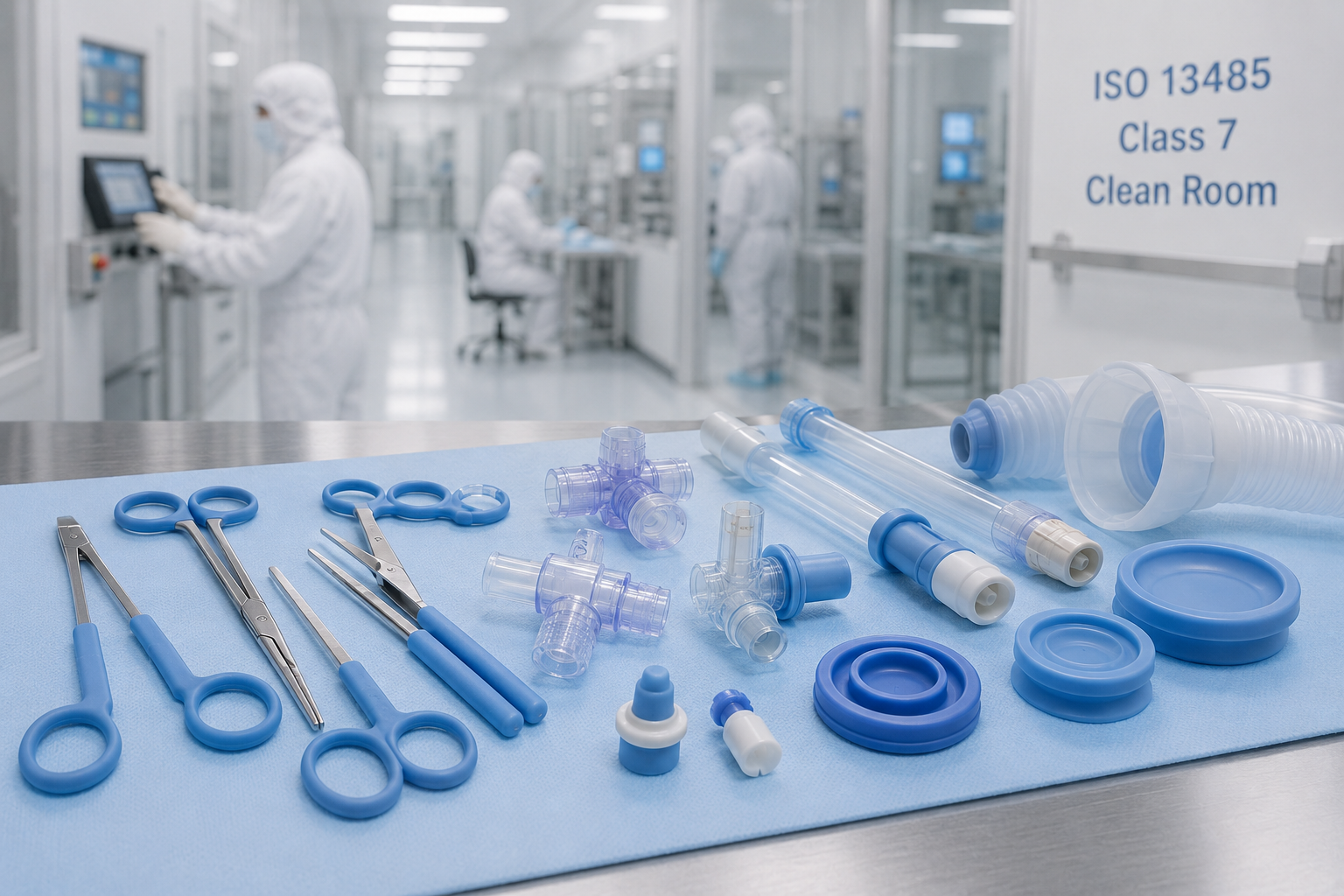
In the medical device industry, safety, compliance, and precision are non-negotiable—every component directly impacts patient health and regulatory approval. Medical grade silicone overmolding has become the gold standard manufacturing process for medical devices, seamlessly bonding biocompatible silicone to metal, plastic, or FPC substrates to create sterile, durable, and high-performance parts. At SiliconePlus, we specialize in custom medical grade silicone overmolding solutions, strictly adhering to ISO 13485 and USP Class VI standards, solving core industry pain points, and helping medical device manufacturers launch compliant, reliable products.
1. Why Medical Devices Must Choose Medical Grade Silicone Overmolding?
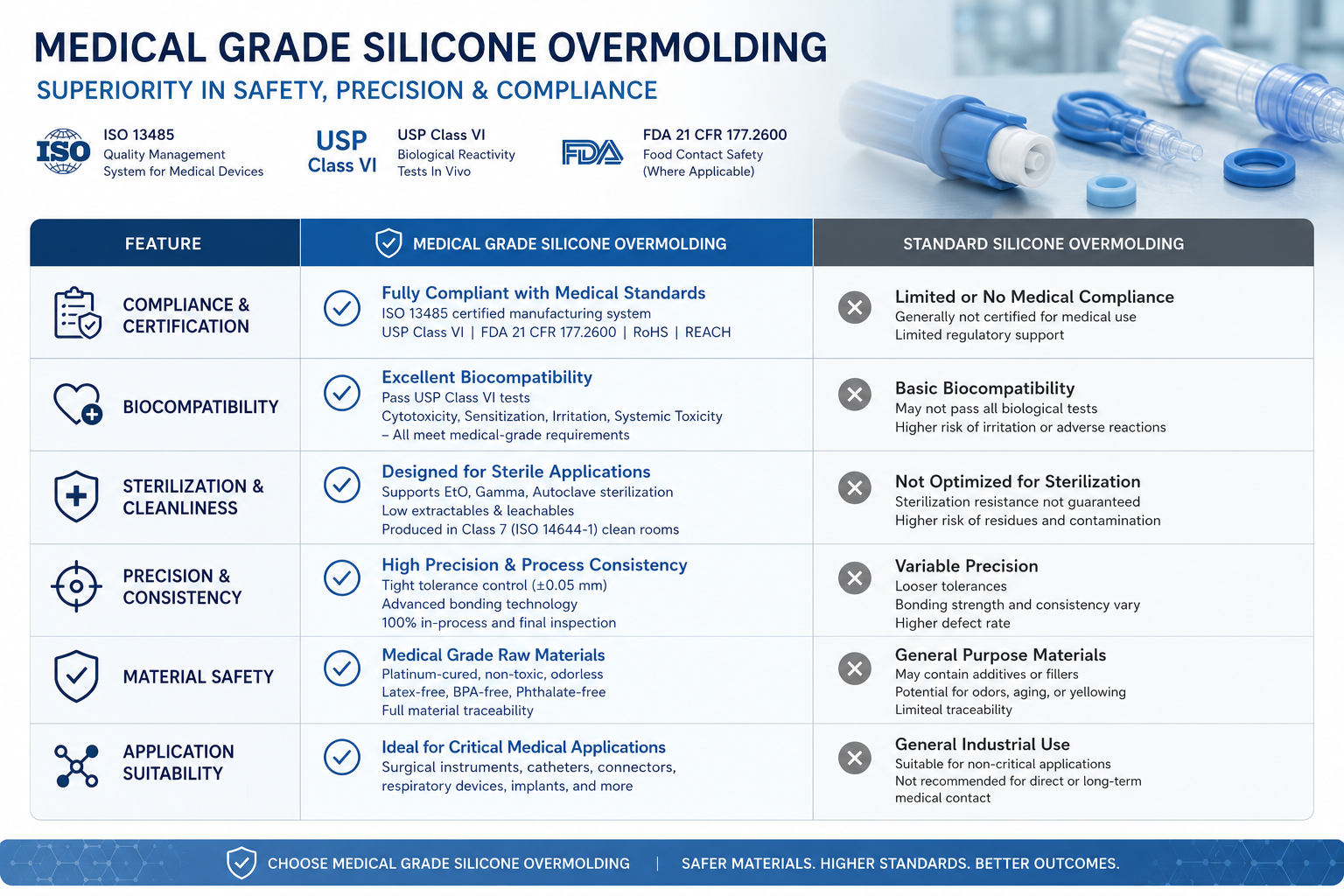
- Strict biocompatibility compliance: Adopting USP Class VI and ISO 10993-certified medical grade silicone, free of harmful substances, non-toxic, hypoallergenic, and safe for direct contact with human tissue, blood, and mucous membranes—passing cell toxicity, sensitization, and implantation tests with cell survival rate ≥90% .
- Sterility assurance: Manufactured in Class 7 cleanrooms, with EO gas, gamma radiation, or autoclave sterilization options, ensuring no bacterial residues and meeting the sterility requirements of medical devices .
- Superior adhesion & durability: Through substrate plasma pretreatment, silane coupling agent coating, and precision mold design, a permanent seamless bond is formed between silicone and substrate, avoiding peeling or separation even after repeated sterilization and long-term use—bonding strength ≥2N/mm² .
- Precision & dimensional stability: Using high-precision CNC molds and LSR injection molding technology, dimensional tolerance is controlled within ±0.01mm, adapting to the complex and miniature structure of medical devices such as catheters and connectors .
- Chemical & temperature resistance: Resistant to medical disinfectants (alcohol, hydrogen peroxide), body fluids, and extreme temperatures (-50℃ to 200℃), maintaining performance stability after repeated sterilization cycles .
2. Key Applications of Medical Grade Silicone Overmolding in Medical Devices
2.1 Surgical Instruments & Operating Tools
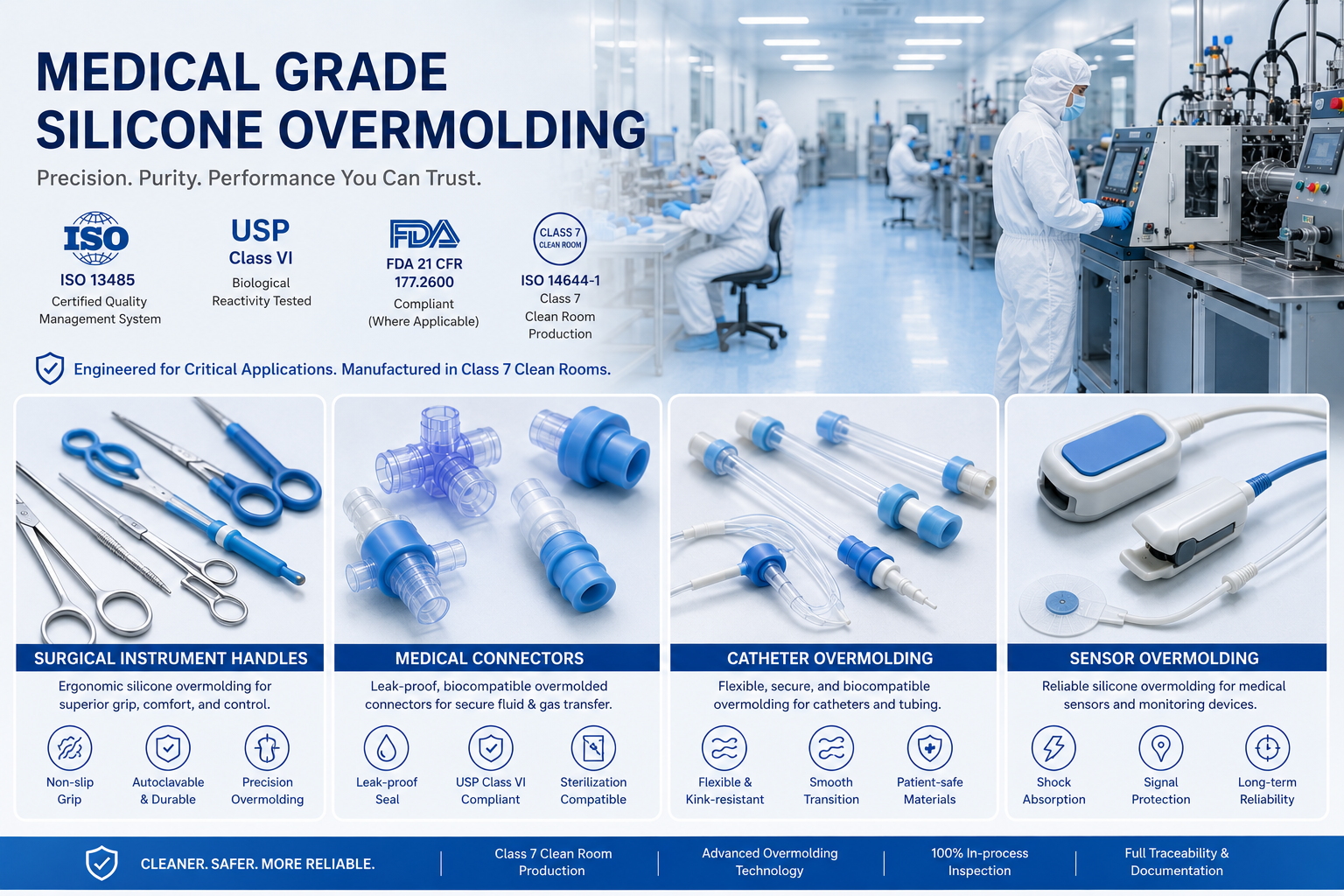
- Overmolded surgical instrument grips: Silicone overmolded on metal handles (stainless steel, titanium alloy) of scalpels, forceps, and electric surgical knives, with non-slip texture design, ergonomic fit, and easy cleaning—solving the problem of hand fatigue and slippage during long-term surgery .
- Overmolded instrument seals: Silicone overmolded on the junction of surgical instrument components, achieving airtight and leak-proof performance, preventing the entry of disinfectants and body fluids, and extending the service life of instruments .
- Overmolded electrode rings: Biocompatible silicone overmolded on metal electrode rings of surgical equipment, ensuring safe contact with human tissue and stable electrical conductivity .
2.2 Medical Connectors & Catheters
- Overmolded medical connectors: Silicone overmolded on plastic/metal connectors of infusion pumps, dialysis machines, and respiratory equipment, forming a seamless seal—leakage rate <1×10⁻⁹ mbar・L/s, preventing the leakage of drugs, blood, or respiratory gases .
- Overmolded catheter components: Silicone overmolded on catheter tips and joints, soft and smooth, reducing irritation to blood vessels and tissues, and the seamless bond prevents fluid leakage and bacterial contamination .
- Overmolded FPC connectors: Silicone overmolded on flexible circuit boards (FPC) of medical monitoring devices, providing insulation, waterproofing, and protection for internal circuits .
2.3 Diagnostic & Monitoring Devices
- Overmolded sensor housings: Silicone overmolded on metal/plastic sensors of blood glucose monitors, temperature monitors, and ECG devices, waterproof, dustproof, and resistant to external interference, ensuring accurate data collection .
- Overmolded wearable medical device components: Silicone overmolded on the shells of wearable health trackers and portable diagnostic devices, skin-friendly, lightweight, and waterproof, suitable for long-term patient wear .
- Overmolded seals for diagnostic equipment: Silicone overmolded on the junction of diagnostic machines (ultrasound, CT) to prevent dust and liquid entry, protecting internal precision components .
2.4 Implantable & Short-Term Contact Devices
- Overmolded implantable accessories: USP Class VI silicone overmolded on titanium or PEEK substrates for short-term implantable sensors (e.g., blood glucose monitors), non-toxic, hypoallergenic, and free of animal-derived components .
- Overmolded respiratory device components: Silicone overmolded on respiratory masks, breathing circuits, and oxygen tubes, soft and skin-friendly, forming a tight seal to prevent air leakage and ensure breathing safety .
3. Solving Common Pain Points of Medical Grade Silicone Overmolding
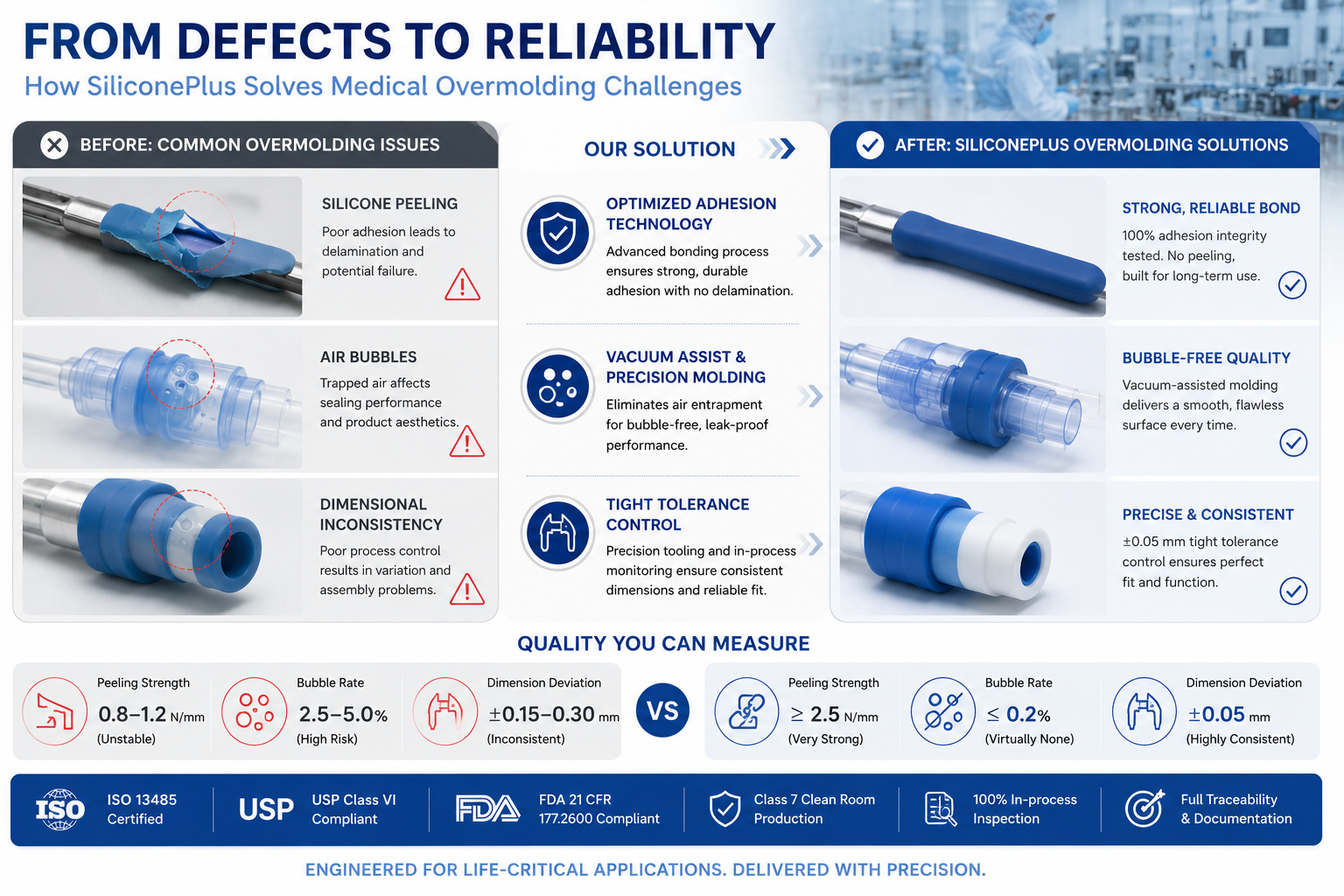
- Pain Point 1: Non-compliant materials leading to regulatory rejection: We use FDA 21 CFR Part 177.2600, ISO 13485, and USP Class VI-certified medical grade silicone, providing complete material certification and batch traceability reports to help customers smoothly pass FDA, CE MDR, and NMPA regulatory submissions .
- Pain Point 2: Poor adhesion and easy peeling after sterilization: We adopt substrate plasma treatment (increasing surface energy to 52mN/m) and self-adhesive LSR materials, combined with mechanical locking structures on the substrate surface, achieving "chemical bonding + physical locking" double reinforcement, ensuring no peeling after 100+ sterilization cycles .
- Pain Point 3: Sterility failure and bacterial contamination: Our production is carried out in Class 7 cleanrooms, with strict environmental control (particle count <352000 particles/m³), and post-production EO/gamma sterilization, with residual EO <10ppm, ensuring sterile compliance .
- Pain Point 4: Insufficient precision and dimensional instability: We use S136 medical-grade stainless steel molds with mirror polishing (Ra≤0.05μm), precise injection parameter control (mold temperature 60-90℃, injection pressure 50-100bar), and post-curing treatment, ensuring dimensional tolerance within ±0.01mm .
- Pain Point 5: High defect rate and high production cost: We optimize the mold exhaust system and injection process, adopt frozen deburring technology (burr residue <0.05mm), reduce material loss to <5%, and lower production costs while ensuring quality .
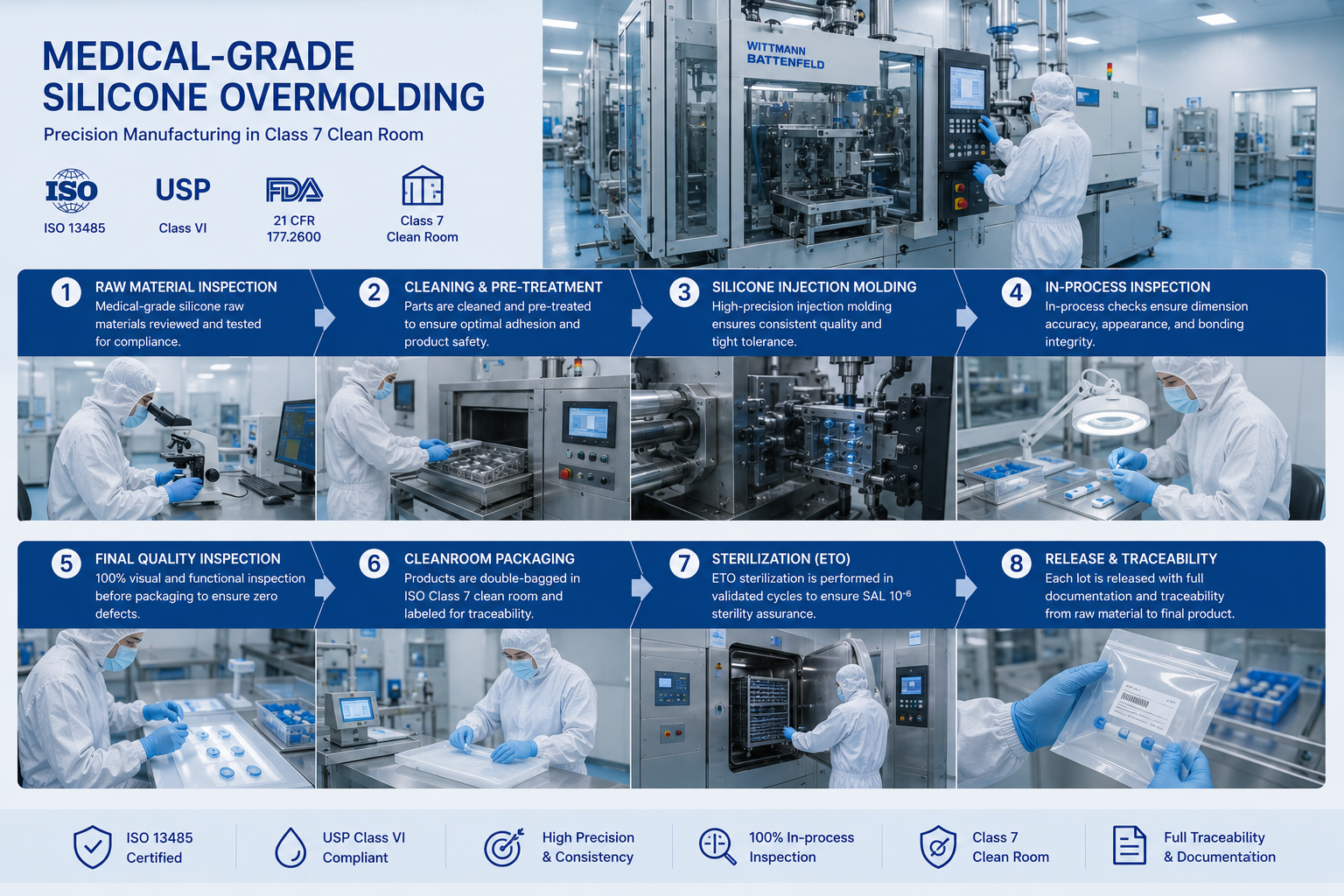
4. Our Medical Grade Silicone Overmolding Process & Compliance Assurance
- Material Selection & Compliance Verification: We select medical grade LSR/HCR silicone (e.g., Dow Corning 3600, Wacker ELASTOSIL® LR 3000) that passes USP Class VI and ISO 10993 biocompatibility tests, with complete certification documents and batch traceability .
- Cleanroom Production Environment: All production processes are carried out in Class 7 cleanrooms, with strict control of temperature (22±2℃), humidity (45±5%), and particle count, avoiding contamination during production .
- Precision Molding & Process Control: Using high-precision LSR injection molding machines (German KraussMaffei, Japanese Fanuc), with independent temperature control (precision ±1℃) and vacuum system (vacuum degree <10mbar), ensuring uniform silicone flow and no bubbles .
- Sterilization & Post-Processing: Post-production EO gas, gamma radiation, or autoclave sterilization, with strict sterilization parameter control and residual testing; frozen deburring and precision cleaning to ensure product surface smoothness and sterility .
- Comprehensive Quality Testing: Every overmolded part undergoes strict testing—adhesion test (≥2N/mm²), biocompatibility test (cell toxicity ≤1 level), dimensional inspection (±0.01mm), and sterility test , with a defect rate <0.1% .
5. Why Choose SiliconePlus for Medical Grade Silicone Overmolding?
- Strict compliance assurance: Our production and products fully comply with ISO 13485, USP Class VI, ISO 10993, FDA 21 CFR Part 177.2600, CE MDR, and NMPA standards, providing complete certification documents and batch traceability reports to help customers pass regulatory approvals .
- Industry-specific expertise: We have in-depth experience in medical grade silicone overmolding, are familiar with the pain points and compliance requirements of the medical device industry, and can provide targeted solutions for complex components (e.g., implantable accessories, miniature connectors) .
- Precision customization capabilities: Support low-volume prototyping (3-7 days) and high-volume mass production, customize silicone hardness (20-80 Shore A), colors, and shapes, and optimize designs for complex medical device structures .
- Sterile production guarantee: Class 7 cleanroom production, strict sterilization processes, and in-house sterility testing ensure that every product meets the sterility requirements of medical devices .
- Dedicated one-stop service: A professional engineering team provides full-service support from design consultation, prototyping, and production to post-production testing and regulatory documentation, solving problems for customers throughout the process .