How Silicone Overmolding Improves Grip and Tactile Feedback in Plastic Devices
- Share
- publisher
- siliconeplus
- Issue Time
- Dec 13,2025
Summary
Silicone overmolding enhances grip, tactile feedback, and ergonomics in plastic devices, comfort, and user experience.

Introduction:
In the competitive landscape of consumer electronics, medical devices, and industrial tools, enhancing user interaction is paramount. Silicone overmolding has emerged as a revolutionary manufacturing process that significantly elevates the grip, tactile feedback, and overall ergonomics of plastic devices. This comprehensive exploration delves into the intricate details of how silicone overmolding transforms ordinary plastic components into high-performance, user-friendly products that outperform traditional designs.
Understanding Silicone Overmolding: A Game-Changer in Product Design
Silicone overmolding involves the process of molding a silicone elastomer directly onto a pre-formed plastic substrate. This technique creates a bonded, seamless interface that combines the strength and structural integrity of the base plastic with the flexibility, softness, and grip-enhancing properties of silicone.
Why Choose Silicone Overmolding?
Superior Grip: Silicone's inherently tacky surface provides exceptional slip resistance, even in wet or sweaty conditions.
Enhanced Tactile Feedback: The soft, rubber-like feel of silicone offers rich tactile sensation, improving user interaction.
Durability & Resistance: Silicone is highly resistant to temperature extremes, UV exposure, chemicals, and aging, ensuring longevity.
Design Flexibility: The process allows for customized shapes, colors, and textures, aligning with branding and ergonomic requirements.
Cost-Effective Manufacturing: Overmolding reduces assembly steps and material costs while improving product quality.
The Manufacturing Process of Silicone Overmolding
Silicone overmolding involves several precise steps to ensure bonding strength, functional performance, and aesthetic appeal:
Preparation of the Plastic Substrate: The base component is manufactured using injection molding or other suitable techniques, designed with specific features for overmolding adhesion.
Application of Release Agents: To facilitate clean demolding, release agents are applied where necessary.
Overmolding Process: Using injection molding machines, liquid silicone is injected around the substrate at controlled temperatures and pressures.
Curing & Cooling: The silicone cures, forming a permanent bond with the plastic substrate.
Post-Processing: Trimming, inspection, and quality assurance ensure the overmolded part meets all specifications.
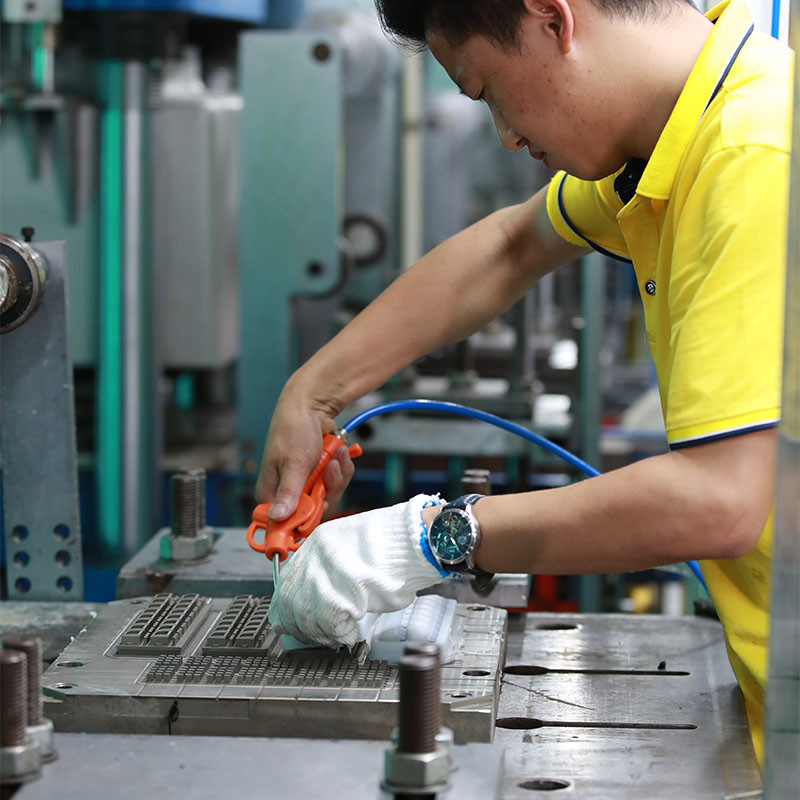
Key Benefits of Silicone Overmolding in Enhancing Grip and Tactile Feedback
1. Unmatched Grip in Diverse Conditions
Silicone's micro-rough surface texture provides outstanding slip resistance. This property remains consistent across various environmental conditions, including humidity, sweat, or oil presence. For handheld tools or medical devices, this reduces user fatigue and enhances safety.
2. Superior Tactile Feedback for Precision Control
The soft, pliable nature of silicone delivers rich tactile sensations. Users can detect subtle differences in pressure and movement, which is crucial for devices requiring fine motor control, such as surgical instruments or gaming controllers.
3. Customizable Textures and Surface Patterns
Manufacturers can incorporate specific textures—such as dimples, ridges, or grip zones—directly into the overmolded silicone. This personalization boosts ergonomic comfort and aligns with brand identity.
4. Enhanced Comfort and Ergonomics
Silicone's elasticity absorbs shocks and vibrations, reducing hand fatigue during prolonged use. The soft touch surface also minimizes pressure points, making devices more comfortable to hold.
5. Increased Durability and Resistance to Wear
Unlike traditional rubber coatings, silicone overmolds resist cracking, peeling, or degradation over time. They maintain their grip and tactile qualities even after exposure to UV rays, chemicals, or extreme temperatures.
Applications of Silicone Overmolding in Modern Industries
| Industry | Application | Benefits Achieved |
Medical Devices | Surgical tools, handheld monitors | Improved grip, sterile surface, patient safety |
Consumer Electronics | Smartphone cases, gaming controllers | Slip resistance, enhanced tactile feedback |
| Industrial Tools | Power tools, control panels | Better grip in harsh environments, vibration damping |
| Automotive | Gear shifters, steering wheels | Ergonomic handling, safety, aesthetic appeal |
| Sports Equipment | Bicycle grips, fitness devices | Comfort, slip resistance, shock absorption |
Design Considerations for Optimal Silicone Overmolding
Achieving maximum performance involves careful design choices:
Material Compatibility: Selecting plastics with appropriate surface energy to ensure strong bonding.
Layer Thickness: Balancing grip effectiveness with aesthetic and functional constraints.
Surface Texture: Designing micro-textures to improve slip resistance without compromising comfort.
Color & Branding: Utilizing silicone's color flexibility to enhance visual appeal and brand recognition.
Environmental Factors: Considering exposure to chemicals, UV, or temperature fluctuations to select suitable silicone formulations.
Innovative Trends and Future Directions in Silicone Overmolding
Smart Overmolds with Embedded Sensors
Integrating flexible sensors within silicone overmolds enables touch-sensitive interfaces, force feedback, or health monitoring, expanding the functionality of plastic devices.
Eco-Friendly and Sustainable Silicone Materials
Advances in biodegradable silicone and green manufacturing processes aim to reduce environmental impact while maintaining performance standards.
Multi-Material Overmolding
Combining silicone with other elastomers or rigid plastics allows for complex, multi-functional designs—such as shock absorption zones, anti-slip grips, and aesthetic accents.
Conclusion: Elevating Product Performance with Silicone Overmolding
Silicone overmolding represents a paradigm shift in the design and manufacturing of plastic devices. By integrating soft, grip-enhancing surfaces directly onto rigid substrates, manufacturers can significantly improve user experience, increase safety, and extend product lifespan. The versatility, durability, and customization options offered by silicone overmolding make it an indispensable tool for creating next-generation products across diverse industries.
In an era where user interaction and ergonomic excellence define competitive advantage, embracing silicone overmolding is no longer optional but essential. It is the key to delivering products that are not only functional but also intuitively comfortable, safe, and visually appealing—setting new standards in product innovation.
Website:www.siliconeplus.net
Email:sales11@siliconeplus.net.
Phone:13420974883
Wechat:13420974883