How Do Design and Tooling Services Reduce Silicone Project Risk?
- Share
- publisher
- Siliconeplus Editor
- Issue Time
- May 28,2026
Summary
Learn how design and tooling services help reduce mold risk, improve DFM, control tooling cost, and support custom silicone molding and overmolding projects.
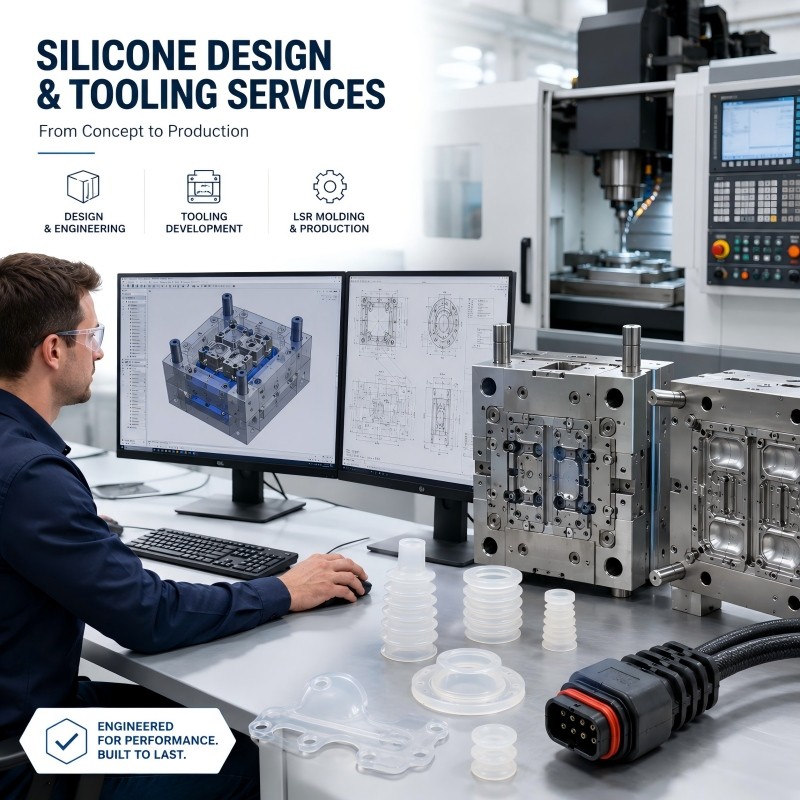
Design and tooling services are critical for custom silicone projects. Before a silicone part enters production, the product structure, material, mold layout, bonding method, sealing design, tolerance, and production process must be reviewed carefully.
For liquid silicone rubber injection molding, silicone compression molding, and silicone overmolding projects, a small design mistake may cause mold modification, flash, poor bonding, difficult demolding, unstable dimensions, water leakage, or higher production cost.
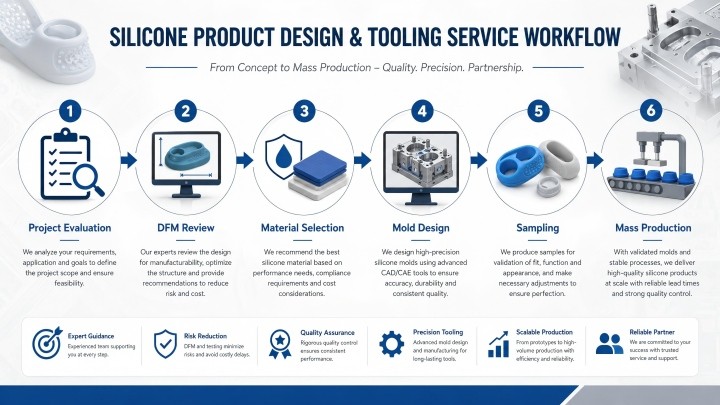
At SiliconePlus, design and tooling services are not only about making a mold. They are part of the full project development process, from product evaluation and DFM review to silicone mold design, sample testing, mold debugging, and mass production support.
Why Do Design and Tooling Services Matter?
Good silicone mold design starts before tooling begins. For custom silicone parts, engineers need to understand how the product will be used, what material will be molded, how the part will seal, how it will be assembled, and what tolerance must be controlled.
If design and tooling are not reviewed early, the project may face repeated mold changes, poor sample results, longer development time, and higher mold cost.
For B2B buyers, professional design and tooling services can help reduce three major risks:
Product risk: the final part may not meet sealing, bonding, comfort, or durability requirements.
Mold risk: the mold may have poor parting line, venting, gate, or demolding design.
Production risk: the sample may pass, but mass production may become unstable.
This is why a reliable silicone manufacturer should provide engineering support before mold opening, not only after the mold is finished.
What Should Be Reviewed Before Mold Design?
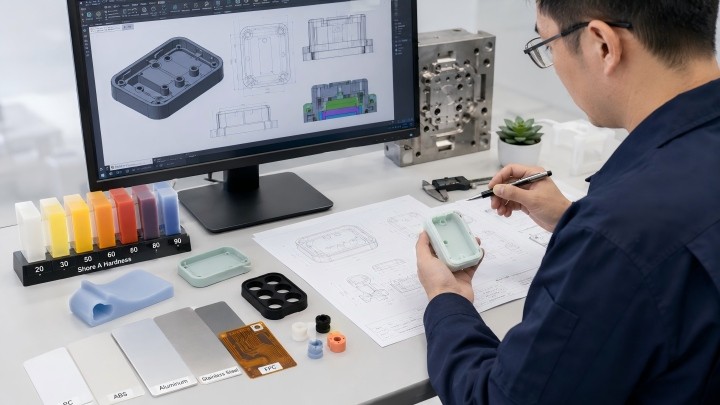
Before silicone mold design starts, the manufacturer should review the product drawing, sample, material requirement, application environment, sealing target, production volume, and assembly method.
For silicone parts, the most important review points include:
- Product function
- Silicone material type
- Shore A hardness
- Wall thickness
- Undercut structure
- Parting line position
- Gate and venting design
- Demolding method
- Sealing compression
- Bonding substrate
- Tolerance requirement
- Surface finish requirement
- Expected production volume
For silicone overmolding projects, the review becomes more complex. The mold must hold the insert or substrate correctly, and the silicone must bond or mechanically lock with plastic, metal, FPC, or another silicone part.
A complete review before tooling can help reduce design changes and improve the first sample success rate.
How Does DFM Reduce Silicone Mold Risk?
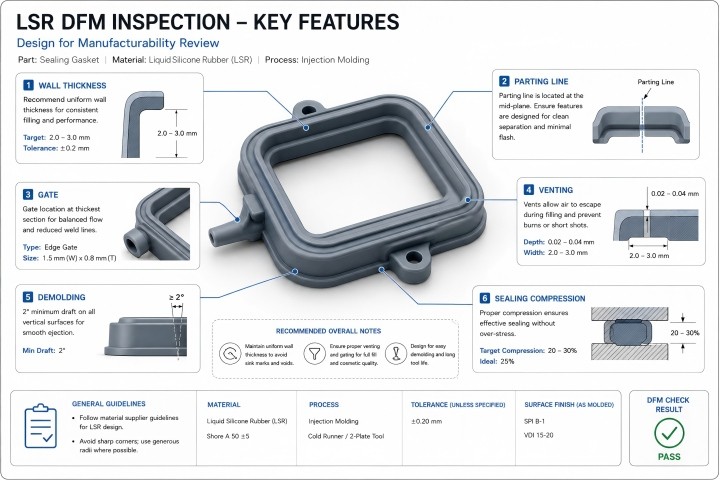
DFM, or design for manufacturing, helps identify manufacturing risks before mold making. For silicone projects, DFM should not only check whether the part can be molded. It should also check whether the part can be molded consistently, assembled correctly, and produced at a reasonable cost.
A practical DFM review can help answer these questions:
Can the silicone fill the cavity properly?
Will the part have flash risks?
Is the parting line acceptable for appearance and sealing?
Can the part be demolded without tearing or deformation?
Is the wall thickness suitable for the molding process?
Does the sealing structure have enough compression?
Can the substrate stay stable during overmolding?
Is the mold suitable for sampling or mass production?
For waterproof silicone parts, DFM is especially important. A weak groove design, wrong compression ratio, or bad parting line may directly cause leakage.
For medical, automotive, 3C electronics, and wearable products, DFM also helps improve production stability, because these applications often require higher precision and more consistent quality.
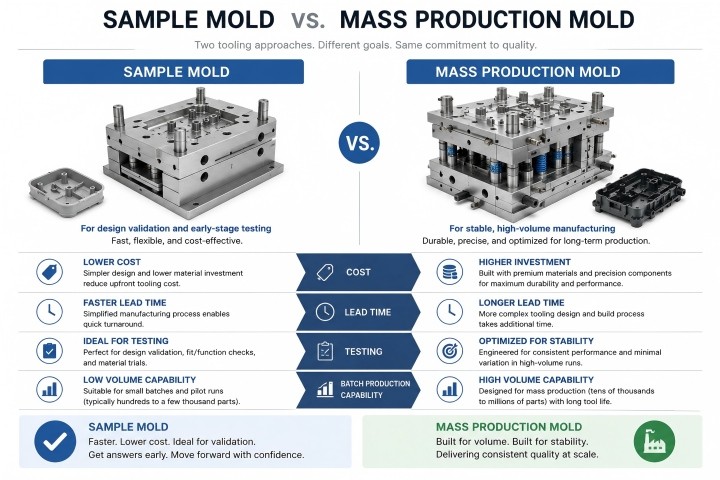
Sample Mold or Mass Production Mold: Which One Is Better?
Not every project needs a mass production mold at the beginning. For new product development, a sample mold can help test structure, material, bonding, sealing, appearance, and assembly before investing in a larger production mold.
A sample mold is suitable when:
- The product structure is still being tested
- The buyer needs quick samples
- The market has not been verified
- The annual demand is uncertain
- The project needs material or sealing tests
A mass production mold is suitable when:
- The product design is confirmed
- The order quantity is stable
- The tolerance requirement is clear
- The part needs high production efficiency
- The buyer wants lower unit cost in long-term production
Choosing the right tooling plan can reduce unnecessary investment. For some custom silicone projects, starting with a sample mold is more practical. For confirmed high-volume products, a multi-cavity mass production mold may be more cost-effective.
FAQ
What are design and tooling services for silicone products?
Design and tooling services include product structure review, DFM analysis, material selection, mold design, sample mold planning, mass production mold development, trial molding, and mold debugging for custom silicone parts.
Why is DFM important before silicone mold making?
DFM helps identify manufacturing risks before mold making. It can reduce mold modification, improve sample success rate, control tooling cost, and support more stable mass production.
Should I choose a sample mold or a mass production mold?
A sample mold is better for early testing, structure verification, and small-batch trials. A mass production mold is better for confirmed designs, stable order quantity, and long-term production efficiency.
What affects silicone mold cost?
Silicone mold cost is affected by part structure, mold material, cavity number, machining difficulty, tolerance, surface finish, runner design, mold size, sample requirements, and production volume.
Can SiliconePlus support design if I only have a sample or idea?
Yes. SiliconePlus can support projects with drawings, physical samples, or initial ideas by providing structure evaluation, material suggestions, DFM review, mold design, sampling, and production support.