How Can Waterproof Silicone Overmolding Improve IP67/IP68 Sealing?
- Share
- publisher
- Siliconeplus Editor
- Issue Time
- May 26,2026
Summary
Learn how waterproof silicone overmolding improves IP67/IP68 sealing, bonding strength, durability, and product reliability for electronics, medical devices, automotive connectors, and wearable products.
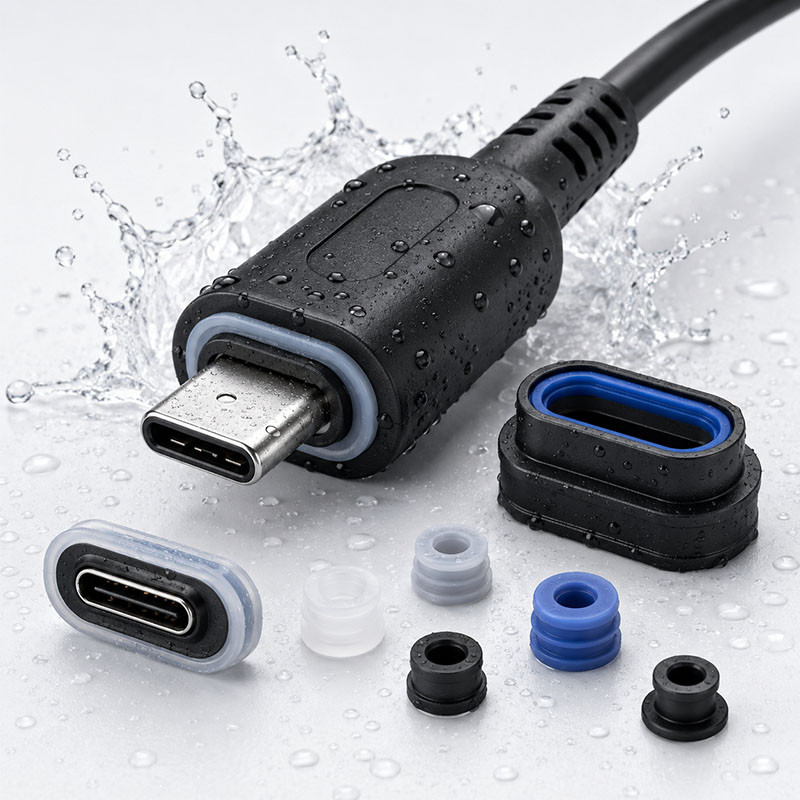
Waterproof silicone overmolding is widely used in products that require sealing, bonding, soft-touch protection, and long-term durability.
By molding liquid silicone rubber directly onto plastic, metal, FPC, or other substrates, manufacturers can create an integrated silicone layer that helps protect products from water, dust, vibration, sweat, and repeated use.
For electronics, medical devices, automotive connectors, wearable products, and industrial components, waterproof performance does not depend on silicone material alone. It also depends on product structure, mold precision, bonding strength, sealing compression, silicone hardness, and final assembly tolerance.
At SiliconePlus, we provide custom liquid silicone rubber injection molding and silicone overmolding solutions for waterproof sealing applications. Our engineering team supports customers from design review and material selection to mold development, sampling, mass production, and quality control.
What Is Waterproof Silicone Overmolding?
Waterproof silicone overmolding is a process that combines silicone with another substrate during molding. The substrate can be plastic, metal, FPC, or another silicone part.
The silicone layer is formed directly around the base part to create sealing, cushioning, insulation, protection, or soft-touch performance.
Compared with separate rubber gaskets, glue sealing, or manual assembly, silicone overmolding can reduce gaps and improve structural integration. This is important because even a very small gap may cause water leakage in waterproof products.
Common applications include Type-C waterproof seals, SIM card tray seals, smartwatch waterproof rings, medical connector seals, automotive connector seals, EV wire harness grommets, battery pack sealing components, and industrial waterproof plugs.
The key advantage is that the silicone is not simply attached to the product. It becomes part of the product structure.
Why Do Waterproof Silicone Parts Fail?
Many waterproof silicone parts fail not because the silicone material is poor, but because the sealing structure is not properly designed.
A waterproof silicone part must maintain stable sealing performance under compression, temperature change, vibration, aging, assembly stress, and repeated use.
Common failure reasons include poor bonding, insufficient compression, wrong silicone hardness, weak sealing groove design, parting line defects, flash, dimensional variation, and unstable mass production control.
For B2B buyers, this means waterproof silicone overmolding should be planned during the early product design stage, not only after the product has already failed testing.
Good design should consider the full structure: silicone hardness, sealing groove, compression ratio, bonding area, mold parting line, gate position, venting, substrate material, and final product testing.
How Does Silicone Overmolding Improve IP67/IP68 Sealing?
IP67 and IP68 waterproof performance cannot be achieved by silicone material alone. It requires the correct combination of material, structure, compression, bonding, mold design, and final product testing.
First, silicone overmolding creates a continuous sealing layer around connectors, ports, buttons, housings, and sensor areas. This reduces leakage points caused by separate parts or manual assembly.
Second, it improves bonding between silicone and the substrate when material selection, surface treatment, mold temperature, injection pressure, and curing process are properly controlled.
Third, silicone provides flexible rebound. A well-designed silicone seal can compress during assembly and recover after pressure changes, helping maintain long-term sealing force.
Fourth, overmolding reduces assembly complexity. Instead of installing multiple separate sealing rings, the silicone seal can be molded directly onto the product structure.
For IP67/IP68 applications, the design should consider silicone hardness, compression ratio, sealing groove structure, bonding area, parting line position, gate and venting design, assembly tolerance, and long-term compression set.
Where Is Waterproof Silicone Overmolding Used?
Waterproof silicone overmolding is widely used in electronic, automotive, medical, wearable, and industrial applications.
In electronics, it is used for Type-C connector seals, USB-C waterproof plugs, power button seals, volume button seals, SIM card tray seals, speaker gaskets, microphone gaskets, FPC waterproof overmolding parts, and electronic enclosure seals.
For compact electronic products, overmolding helps improve sealing while keeping the product structure small and stable.
In automotive and EV components, waterproof silicone overmolding is used for automotive connector seals, EV connector seals, wire harness grommets, charging port seals, battery pack gaskets, BMS sealing components, sensor housing seals, and high-voltage cable protection parts.
These parts must resist temperature change, vibration, dust, oil exposure, and long-term aging.
Is Waterproof Silicone Overmolding Suitable for Medical and Wearable Devices?
Yes. Medical devices and wearable products are important applications for waterproof silicone overmolding.
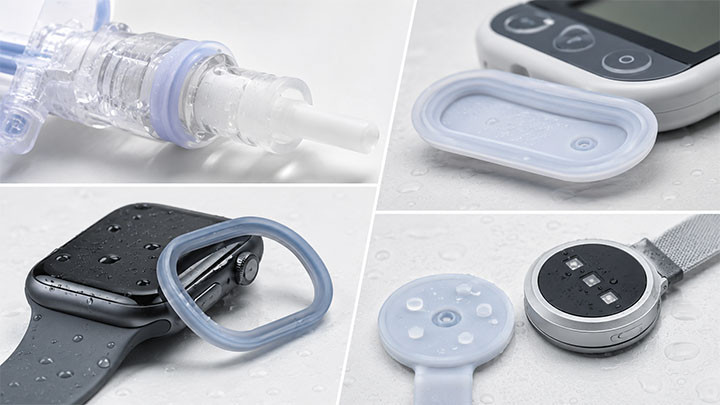
Medical devices require reliable sealing, clean molding, material safety, and long-term stability. Typical parts include medical connector seals, diagnostic equipment gaskets, wearable health monitor seals, respiratory device silicone parts, medical cable protection parts, soft-touch medical handles, and overmolded medical electronic components.
For medical applications, waterproof design may also involve cleaning resistance, patient-contact comfort, biocompatibility support, sterilization conditions, and production cleanliness.
Wearable devices require waterproof sealing, skin comfort, sweat resistance, flexibility, and compact design. Typical parts include smartwatch waterproof rings, smart bracelet seals, sensor sealing gaskets, charging pin seals, watch crown seals, speaker gaskets, microphone gaskets, and wearable connector seals.
For wearable products, the best waterproof design usually combines soft-touch silicone, precise molding, strong bonding, slim structure, and stable assembly tolerance.
What Should Buyers Confirm Before Mold Development?
The first factor is substrate material. Plastic, metal, and FPC have different bonding requirements. PC, PBT, stainless steel, aluminum, and FPC may require different surface treatments, material matching, or mechanical locking designs.
The second factor is silicone hardness. Hardness affects sealing force, compression, rebound, assembly force, and touch feeling. The right hardness should match the product structure and sealing pressure.
The third factor is sealing compression. Too little compression may cause leakage, while excessive compression may cause deformation or long-term compression set.
The fourth factor is mold precision. Parting lines, flash control, gate position, venting, and mold alignment can directly affect waterproof performance.
The final factor is testing. IP67 or IP68 waterproof performance should be confirmed through final product testing. A good material and structure are important, but the assembled product must be validated under real use conditions.
How Can SiliconePlus Support Your Project?
SiliconePlus provides custom waterproof silicone overmolding solutions for electronics, automotive, medical, wearable, and industrial applications.
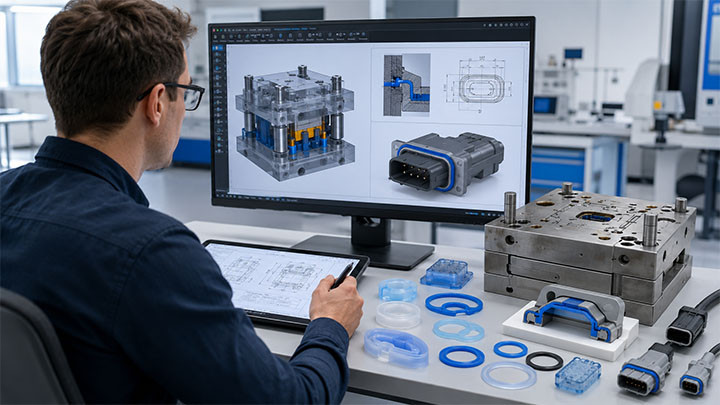
We support customers from early product evaluation to mass production, including product structure review, waterproof sealing design support, LSR material selection, Shore A hardness recommendation, substrate bonding evaluation, DFM analysis, silicone mold design, LSR injection molding, prototype sampling, and mass production quality control.
Whether your project involves a Type-C waterproof seal, automotive connector seal, medical electronic component, wearable device gasket, or custom industrial waterproof part, our engineering team can help optimize the structure, material, mold, and process.
Conclusion
Waterproof silicone overmolding is a key manufacturing solution for products that require IP67/IP68 sealing, strong bonding, soft-touch protection, and long-term durability.
A reliable waterproof silicone part is not created by material alone. It requires proper hardness selection, compression design, bonding control, mold precision, substrate compatibility, and final product validation.
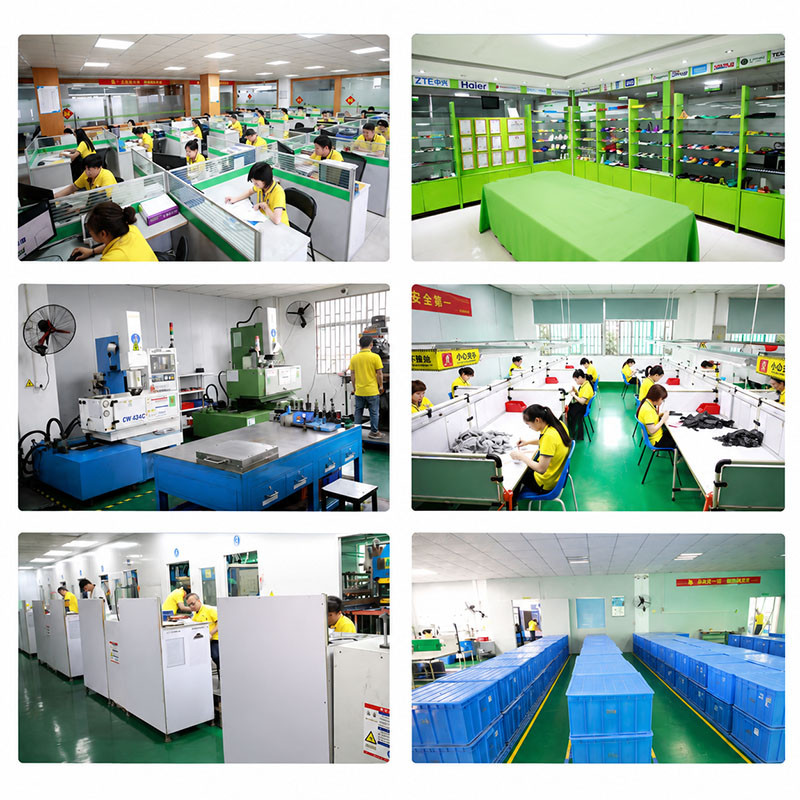
If you are developing a custom waterproof silicone overmolding project, SiliconePlus can support you with material selection, DFM review, mold design, LSR injection molding, overmolding production, and sealing structure optimization.
Contact SiliconePlus today to discuss your waterproof silicone overmolding project and get professional engineering support.
FAQ
What is waterproof silicone overmolding?
Waterproof silicone overmolding is a process where liquid silicone rubber is molded directly onto plastic, metal, FPC, or another substrate to create an integrated sealing and protection layer.
Can silicone overmolding achieve IP67 or IP68 waterproof performance?
Yes. Silicone overmolding can support IP67 or IP68 waterproof performance when the material, sealing structure, compression design, bonding strength, mold precision, and final assembly are properly engineered and tested.
What materials can be used with waterproof silicone overmolding?
Waterproof silicone can be overmolded onto plastic, metal, FPC, and silicone substrates, depending on material compatibility, bonding requirements, and product structure.
Why does waterproof silicone overmolding fail?
Common reasons include poor adhesion, insufficient compression, improper sealing groove design, parting line defects, flash, dimensional variation, and weak process control.
Can SiliconePlus help design waterproof silicone overmolding parts?
Yes. SiliconePlus can review your drawings, application requirements, substrate material, waterproof target, and production plan to provide custom LSR overmolding and sealing design support.