Exploring Silicone Materials: Which Silicone Material Is Right for Your Custom Parts?
- Share
- publisher
- Siliconeplus Editor
- Issue Time
- May 27,2026
Summary
Explore common silicone materials for custom parts, including LSR, solid silicone, medical grade silicone, food grade silicone, conductive silicone, and overmolding materials for electronics, medical, automotive, and wearable applications.
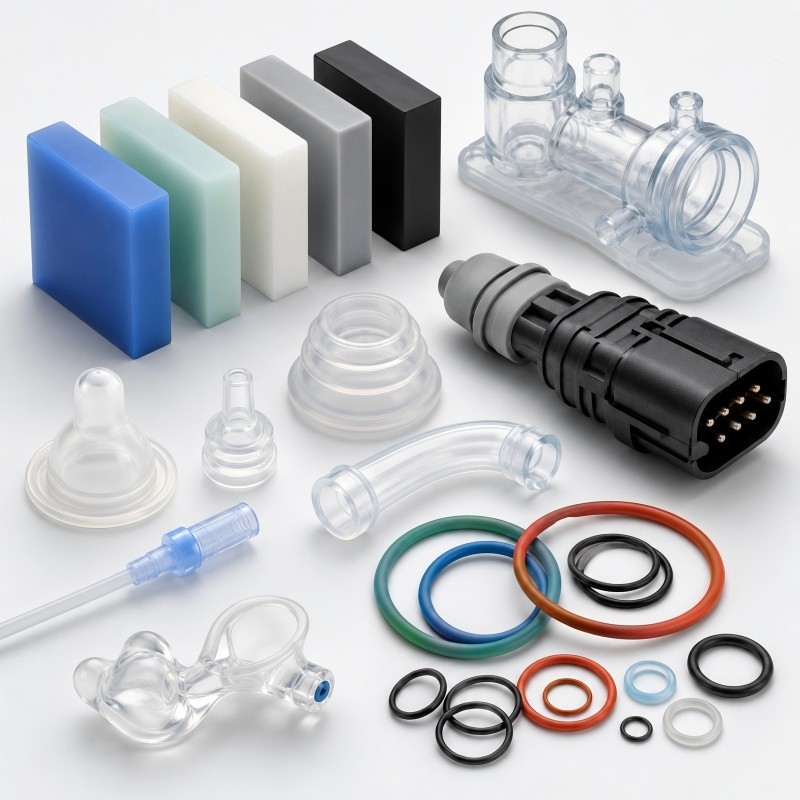
Choosing the right silicone material is one of the most important steps in a custom silicone project. Different silicone materials can affect sealing performance, bonding strength, flexibility, hardness, temperature resistance, safety, production stability, and long-term durability.
For medical devices, electronics, automotive connectors, wearable products, industrial seals, and silicone overmolding parts, material selection should not be based only on color, softness, or price. It should be based on the final application, product structure, molding process, compliance requirements, and real working environment.
At SiliconePlus, we provide custom silicone molding and silicone overmolding solutions for liquid silicone rubber, solid silicone, medical grade silicone, food grade silicone, transparent silicone, conductive silicone, and special performance silicone materials. Our engineering team helps customers match the right material with the right process before mold development.
Why Does Silicone Material Selection Matter?
Silicone is widely used because it offers flexibility, sealing performance, temperature resistance, aging resistance, electrical insulation, and stable chemical properties. However, not all silicone materials are suitable for every product.
A material that works well for a soft-touch consumer product may not be suitable for an automotive connector seal. A silicone used for skin-contact comfort may not provide enough support for a high-pressure waterproof seal. A standard silicone material may also fail to meet the documentation needs of medical, food-contact, or export projects.
For B2B buyers, choosing the wrong material can create production problems such as weak sealing, poor bonding, deformation, difficult demolding, unstable dimensions, failed testing, or shortened product life.
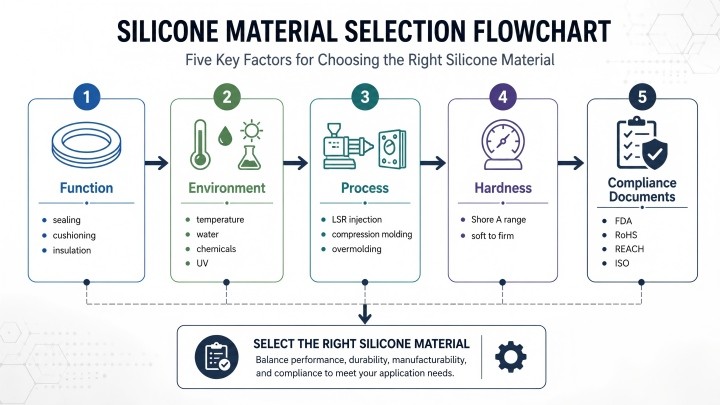
What function does the silicone part need to perform?
What environment will the part face?
Which molding process will be used?
Does the product require compliance documents?
What level of precision and production stability is needed?
What Are the Common Types of Silicone Materials?
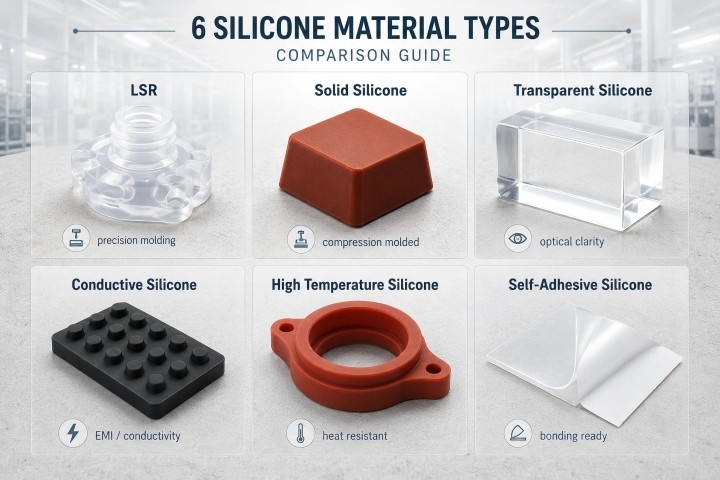
Different silicone materials are used for different product structures and performance requirements. The most common options include liquid silicone rubber, solid silicone rubber, medical grade silicone, food grade silicone, transparent silicone, conductive silicone, high-temperature silicone, and self-adhesive silicone.
Liquid silicone rubber, often called LSR, is a two-component silicone material used for precision injection molding. It is suitable for high-volume production, small precision parts, complex structures, thin-wall parts, waterproof seals, and clean molding requirements.
LSR is commonly used for medical parts, waterproof electronics, automotive seals, wearable components, silicone valves, gaskets, membranes, and overmolded parts.
Its advantages include stable dimensions, high repeatability, good flowability, automation compatibility, and the ability to form complex shapes with consistent quality.
Solid Silicone Rubber
Solid silicone rubber is usually processed by compression molding or transfer molding. It is suitable for gaskets, O-rings, sealing pads, protective sleeves, silicone buttons, and medium-to-large silicone products.
Compared with LSR, solid silicone can be more cost-effective for some lower-volume projects or simpler product structures. It is also suitable for products that do not require thin-wall molding or highly automated injection production.
Medical grade silicone is used for healthcare and medical device applications where material safety, cleanliness, biocompatibility support, and traceability may be required.
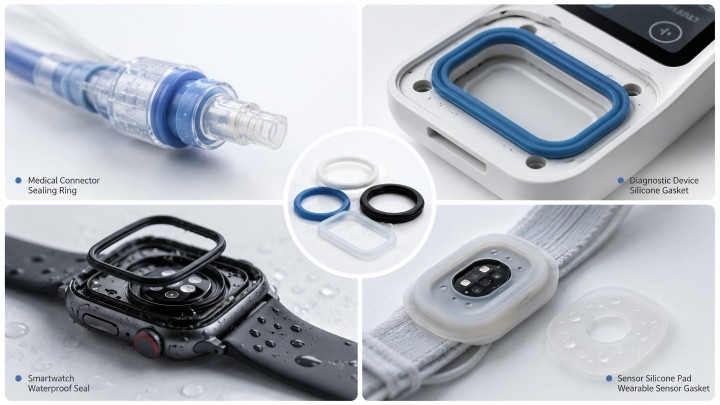
Typical applications include medical seals, diagnostic equipment gaskets, respiratory device parts, silicone valves, wearable health monitor components, medical connector seals, and soft-touch medical handles.
For medical projects, buyers should not only ask whether the material is “medical grade.” They should also confirm intended use, contact type, documentation, production cleanliness, post-curing requirements, and quality control process.
Food Grade Silicone
Food grade silicone is used for products that may contact food, beverages, or oral-use consumer products. Typical applications include baby feeding products, kitchenware seals, bottle parts, food container seals, and reusable silicone components.
For export projects, buyers should confirm the target market and required testing documents before production. Different countries, applications, or product categories may require different compliance support.
Conductive, Transparent and Self-Adhesive Silicone
Conductive silicone is designed to provide electrical conductivity or electromagnetic shielding. It is often used in electronic devices, keypads, EMI shielding parts, sensor components, and special industrial applications.
Transparent silicone is used when optical appearance, light transmission, cleanliness, or visual inspection is important. It is commonly used in medical parts, electronic components, beauty devices, transparent seals, and special overmolded structures.
Self-adhesive silicone is often used in silicone overmolding projects. It can help improve bonding to certain plastic, metal, FPC, or other substrates when material compatibility and process conditions are properly controlled.
How to Choose Silicone Materials by Application
A good silicone material choice should match the final application. The same silicone material may perform very differently in medical, electronics, automotive, wearable, and industrial products.
Electronics and 3C Devices
Electronics require waterproof sealing, compact structure, precision molding, aging resistance, and stable assembly.
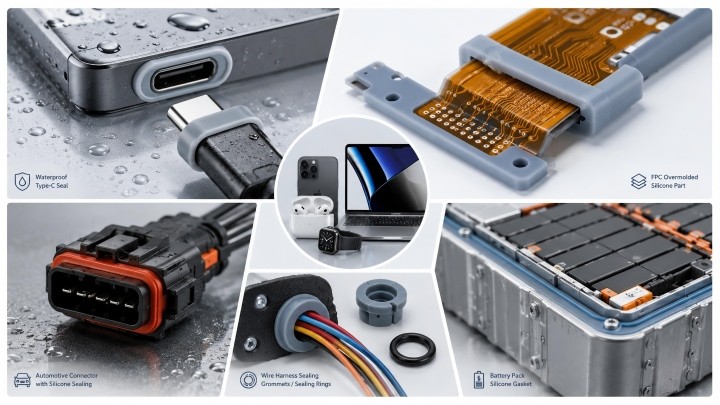
Common products include Type-C waterproof seals, SIM card tray seals, speaker gaskets, microphone gaskets, power button seals, FPC overmolding parts, charging port seals, and electronic enclosure gaskets.
For electronics, LSR and self-adhesive silicone are often used when the part requires precision, waterproof performance, and overmolding onto plastic, metal, or FPC.
Automotive and EV Components
Automotive silicone parts must resist temperature change, vibration, dust, oil exposure, aging, and long-term compression.
Common products include automotive connector seals, EV connector seals, wire harness grommets, charging port seals, battery pack gaskets, sensor seals, and high-voltage cable protection parts.
For these applications, material selection should consider hardness, compression set, high and low temperature resistance, oil resistance, and production consistency.
Medical and Healthcare Devices
Medical and healthcare applications require material safety, clean molding, stable sealing, soft-touch comfort, and documentation support.
Medical grade LSR is commonly used for medical connector seals, diagnostic equipment gaskets, respiratory device silicone parts, silicone valves, wearable health monitor seals, and overmolded medical electronic components.
For medical projects, material selection should be reviewed together with intended use, contact area, sterilization method, production cleanliness, and traceability requirements.
Wearable Devices
Wearable devices need skin comfort, sweat resistance, waterproof sealing, flexibility, and compact design.
Common parts include smartwatch waterproof rings, smart bracelet seals, sensor gaskets, charging pin seals, watch crown seals, microphone gaskets, speaker gaskets, and wearable connector seals.
For wearable products, softer silicone may improve comfort, while medium hardness silicone may support sealing stability and dimensional control.
What Material Properties Should Buyers Check?
Before confirming a silicone material, buyers should review several key properties with the manufacturer.
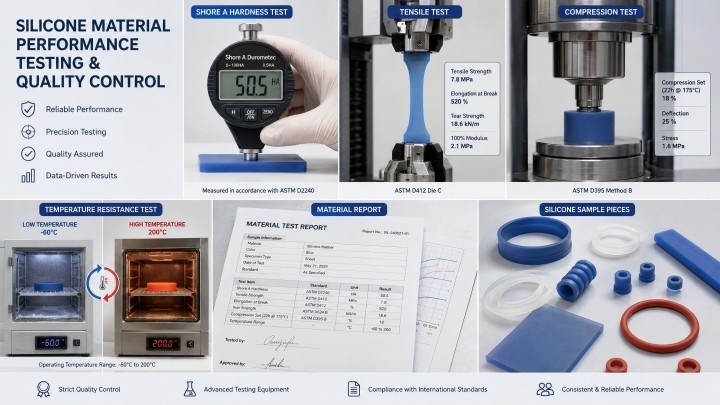
The first property is hardness. Silicone hardness affects sealing force, flexibility, compression, rebound, assembly force, and touch feeling.
The second property is temperature resistance. Different applications require different thermal performance, especially automotive, industrial, and electronic products.
The third property is tear strength. Parts with thin walls, complex structures, or repeated pulling need better tear resistance.
The fourth property is compression set. For sealing parts, the silicone must maintain rebound after long-term compression.
The fifth property is bonding compatibility. In overmolding projects, silicone must work with the substrate material, such as plastic, metal, FPC, or another silicone part.
The sixth property is compliance documentation. Medical, food-contact, electronic, and export products may require different material reports or declarations.
How Do Silicone Materials Affect Mold Design and Production?
Silicone material selection also affects mold design and production stability.
LSR materials have good flowability, which makes them suitable for precision injection molding and complex structures. However, the mold must control parting lines, venting, gate position, flash, shrinkage, and demolding.
Solid silicone materials may be suitable for compression molding, but product structure, mold cavity, curing time, flash control, and trimming process should be reviewed before production.
For silicone overmolding, material choice becomes more complex. The manufacturer must consider the silicone grade, substrate material, bonding method, surface treatment, mold temperature, injection pressure, and curing conditions.
This is why material selection should be confirmed before mold development. Changing the material after tooling may affect shrinkage, flow, bonding, hardness, flash control, and final part performance.
How SiliconePlus Supports Silicone Material Selection
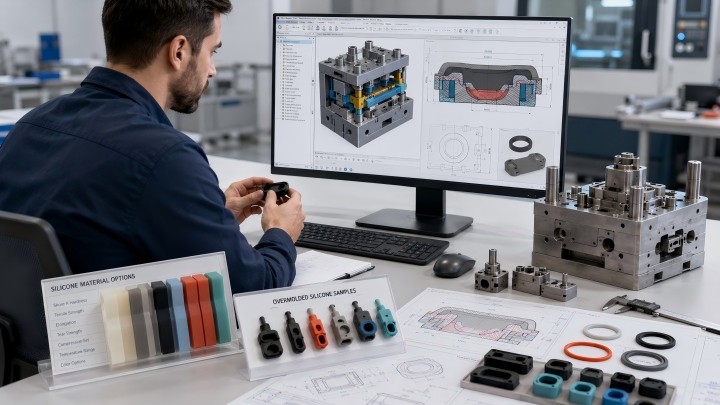
SiliconePlus supports customers from material selection to mold design, sampling, and mass production. We help evaluate product function, application environment, hardness, sealing requirement, bonding substrate, compliance needs, and production process.
Our services include silicone material recommendation, LSR injection molding, solid silicone molding, silicone overmolding on plastic, metal, FPC, and silicone, medical grade silicone part development, waterproof sealing design support, Shore A hardness selection, DFM review, silicone mold design, prototype sampling, and mass production quality control.
Whether your project requires a medical silicone seal, automotive connector gasket, waterproof electronics part, wearable device component, transparent silicone part, or custom overmolded silicone product, our engineering team can help select the right material and process before mold development.
Conclusion
Exploring silicone materials is not just about comparing soft and hard silicone. It is about matching material performance with product function, molding process, application environment, compliance needs, and long-term reliability.
LSR is suitable for precision injection molding and complex parts. Solid silicone can be practical for compression molded seals and gaskets. Medical grade silicone supports healthcare applications. Food grade silicone is used for food-contact products. Conductive, high-temperature, transparent, and self-adhesive silicone materials solve more specific engineering challenges.
If you are developing a custom silicone part and are not sure which material to choose, SiliconePlus can review your drawings, application requirements, and production plan to recommend the right silicone material and manufacturing process.
Contact SiliconePlus today to discuss your custom silicone material selection and overmolding project.
FAQ
What are the most common silicone materials for custom parts?
Common silicone materials include liquid silicone rubber, solid silicone rubber, medical grade silicone, food grade silicone, conductive silicone, high-temperature silicone, transparent silicone, and self-adhesive silicone.
What is the difference between LSR and solid silicone?
LSR is a liquid silicone material used for precision injection molding and high-volume production. Solid silicone is usually used for compression molding and may be suitable for gaskets, O-rings, pads, sleeves, and simpler silicone products.
Which silicone material is best for waterproof sealing?
The best material depends on the product structure, hardness, compression design, use environment, and assembly method. LSR and self-adhesive silicone are commonly used in waterproof overmolding and precision sealing applications.
Can silicone be overmolded onto plastic, metal, or FPC?
Yes. Silicone can be overmolded onto plastic, metal, FPC, and silicone substrates when material compatibility, surface treatment, mold design, and processing conditions are properly controlled.
Can SiliconePlus help choose the right silicone material?
Yes. SiliconePlus can review your product drawings, application requirements, substrate material, sealing target, and production plan to recommend a suitable silicone material and molding process.